
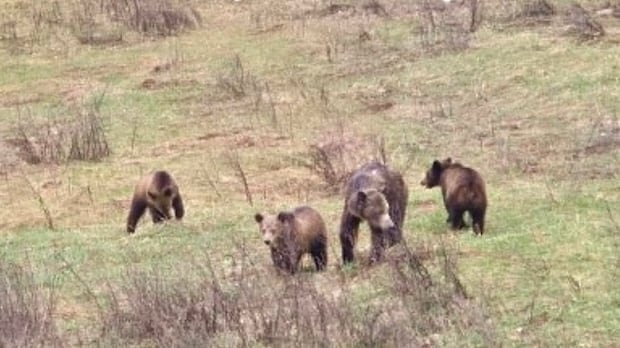
In the West Kootenay region, a third grizzly bear from a well-known family of four bears has been euthanized. The mother bear and her three yearlings had been roaming around the community of Nelson, catching the attention of locals. However, wildlife officials determined that the bears had become habituated to human presence, posing a danger as they scavenged for food in yards and garbage.
Earlier this month, the mother bear, which had been relocated from Nelson previously, was put down along with one of the yearlings. The conservation officers cited the young bear’s age and health issues, including a noticeable limp, as reasons for not being suitable for relocation due to potential injury or deformity.
Despite efforts to relocate the remaining two yearlings, a male and a female, the male bear resurfaced in the Christina Lake community after some time. While the female bear has moved on, the male bear continued to frequent residential areas, leading authorities to deem it unsuitable for relocation. The decision was made to euthanize the male bear in accordance with the guidelines for human-wildlife conflict response.
Provincial wildlife biologist Garth Mowat highlighted the bears’ high level of habituation to humans, emphasizing their reliance on human food sources. The translocation of the bears was attempted as a final measure with hopes that they would adapt to natural food sources and survive in the wild.
Andrew Milne from the B.C. Conservation Officer Service reiterated that euthanizing wildlife is a last resort and a difficult decision for officers. He emphasized the importance of minimizing attractants to prevent human-bear conflicts, especially with poor berry crops and increased bear activity expected due to drought conditions in the B.C. Interior.
Authorities urge residents to remove potential attractants like fruit trees, garbage, and bird feeders to mitigate human-wildlife conflicts and protect both bears and communities from harm.