
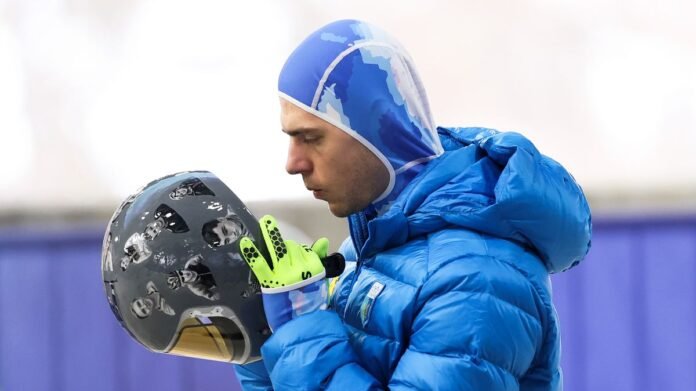
Ukraine’s Vladyslav Heraskevych has been barred from participating in the Winter Olympics by the International Olympic Committee (IOC) for his insistence on wearing a helmet adorned with images of 24 deceased Ukrainian athletes who perished due to Russia’s invasion. Heraskevych, a skeleton pilot, defied the IOC’s directive against wearing the helmet and has subsequently been disqualified from the games.
The 27-year-old athlete, after being informed that he could not wear the helmet, wore it during a training session despite the prohibition. Despite his attempts to appeal to the IOC, the committee deemed the helmet a political statement and revoked Heraskevych’s accreditation for the Olympics.
In a statement online, Heraskevych expressed his belief that not wearing the helmet would be a betrayal to the fallen athletes. He now intends to challenge the decision by lodging an appeal with the Court of Arbitration for Sport, stating, “It’s hard to put into words. It’s emptiness. This is the price of our dignity.”
His father and coach, Mykhailo, who was present at the venue, was visibly emotional upon hearing the news of his son’s disqualification. The IOC justified its decision by stating that Heraskevych had refused to comply with their guidelines on athlete expression.
Kirsty Coventry, the IOC president, personally met with Heraskevych in an effort to find a resolution. Coventry, a Zimbabwean politician, traveled to Cortina to engage in face-to-face discussions with the athlete. She expressed regret that they could not reach a compromise that would allow Heraskevych to compete.
Heraskevych, with less than two hours before the competition was set to begin, called on the IOC to reverse the ban and issue an apology. Despite the rejection of his request by the IOC, Heraskevych emphasized that the incident had brought attention to the plight of Ukrainian athletes but also diverted focus from the sporting events and athletes.
The IOC maintained that mourning is interpreted differently worldwide and stood by its decision.