
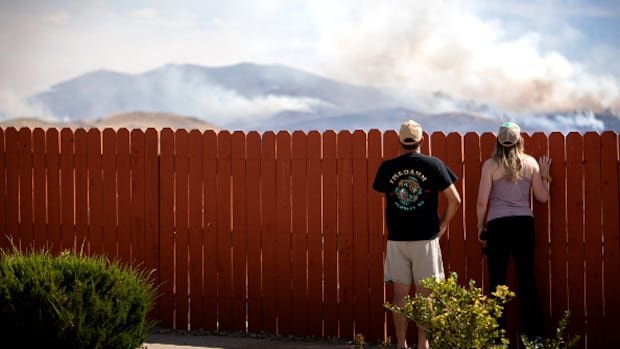
A rapidly spreading wildfire in northwest Reno, Nevada, on Sunday destroyed homes and impeded firefighters’ efforts to reach crucial areas, as shifting winds posed challenges for containment. Authorities instructed approximately 90,000 individuals to evacuate due to the fire’s intensity.
Reports confirmed that six individuals, including three first responders and three civilians, sustained injuries. Although officials attributed the fire to human activity, they did not disclose specifics regarding the cause’s nature or whether it was accidental or intentional.
The Hawk Fire ignited on Saturday and swiftly expanded to over 60 square kilometers in the Peavine Peak vicinity of the Humboldt–Toiyabe National Forest. This area is surrounded by residential and commercial establishments near the California state border.
Approximately 42,000 residents were mandated to evacuate from the expanding “GO NOW” zone, reaching the periphery of the University of Nevada. An additional 45,000 individuals were placed under an evacuation warning. Authorities urged all affected individuals to evacuate immediately and prepare for an extended absence, given the anticipated erratic behavior of the fire due to the forecasted wind shifts.
Cari Kieffer recounted a harrowing experience of witnessing her residence consumed in flames, with only a scorched basketball hoop left standing. She and her family hurriedly evacuated after realizing that the fire had encroached upon their neighborhood, despite initially believing it was under control.
Nevada Governor Joe Lombardo declared a state of emergency in Washoe County and mobilized the Nevada National Guard to bolster aerial firefighting efforts with two helicopter crews and deploy 60 troops to assist law enforcement in protecting evacuated areas. Additionally, 800 firefighting personnel were dispatched to combat the blaze.
Power outages affected nearly 10,000 customers in Washoe County, down from 60,000 the previous day. Sections of U.S. Route 395 were closed due to the fire’s proximity. Reno, Nevada’s largest city outside of the Las Vegas metropolitan area, was significantly impacted by the unfolding crisis.
Emergency services established evacuation centers at the Reno-Sparks Convention Center, where evacuees were accommodated, albeit without their pets, which were directed to alternative facilities. Local casinos extended discounted accommodation options to evacuees in need of temporary shelter.
The wildfire’s rapid escalation caught many residents off guard, with the wind playing a pivotal role in exacerbating the situation. A surge in new fires across Nevada on Saturday, fueled by prolonged dry conditions and a lack of winter snowfall in the American West, underscored the heightened fire risk in the region.
The University of Nevada narrowly escaped the evacuation zone on Sunday, providing a safe haven for students as they moved into campus residences. Amid the chaos, hospitals evacuated patients, and authorities closely monitored the need to potentially evacuate the county jail.
The fire’s swift advancement on Saturday night presented significant challenges for responders, as it overtook fire trucks and hindered access to critical areas. The sheriff highlighted the confusion caused by shifting winds, which propelled the flames in unpredictable directions.