
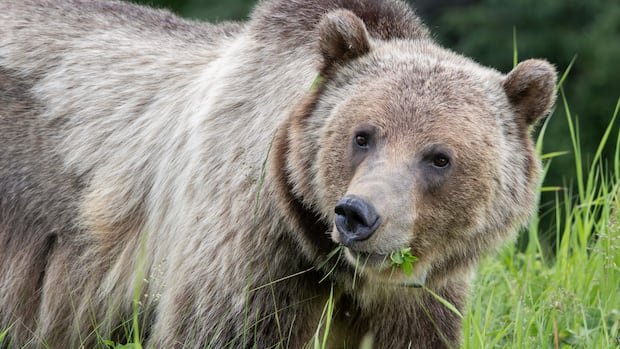
In Alberta, the year 2024 witnessed a higher number of human-caused grizzly bear fatalities than any other year on record, based on data from the provincial government. The mortality rates of grizzly bears caused by humans have been published by the province, with data available from 2005 to 2025 on its official website.
During 2024, a total of 40 confirmed grizzly deaths were reported, attributed to various causes such as poaching, vehicle collisions, and lethal removal by law enforcement authorities. Notably, 21 grizzlies were killed through “agency removals,” indicating that they were put down by Alberta Fish and Wildlife Enforcement Services, conservation officers, or other law enforcement officials. This marks the highest numbers ever recorded in a single year, with agency removals accounting for more than half of the total grizzly bear deaths for the first time.
Prior to this, the highest known human-caused grizzly bear fatality count was 29 in 2016, primarily due to vehicle accidents. The previous highest number of lethal removals by law enforcement occurred in 2023, where 12 out of 26 documented grizzly deaths were categorized as agency removals.
Retired Fish and Wildlife officer, John Clarke, attributes the spike in grizzly bear deaths in 2024 to the updated grizzly bear response guide introduced in 2023. This guide classifies bears based on factors like age, cub presence, and problematic behavior, with a specific focus on male grizzlies. Clarke expresses concern that the latest guidelines have essentially created a “hit list” targeting male bears, as evidenced by the majority of the 21 grizzlies killed by law enforcement in 2024 being male.
Under the revised response framework, male grizzlies can be terminated upon the first report of habituation or food conditioning if they are outside designated recovery areas outlined in the Grizzly Bear Recovery Plan. Additionally, regardless of sex, bears found outside these zones can be euthanized unless they have cubs, in which case they are relocated initially but face lethal measures upon subsequent incidents.
The province emphasizes that officers must justify their actions when killing a grizzly bear, and collaborative decision-making is encouraged before resorting to lethal measures. The guidance underscores the importance of taking preventive actions, such as hazing, area closures, or removal of food attractants, before considering capture or euthanasia.
In response to the elevated mortalities in 2024, the provincial ministry of Forestry and Parks stresses that the surge in human-caused grizzly bear deaths and agency removals reflects annual fluctuations in conflict incidents rather than a singular, province-wide cause. The mortality data spans multiple regions of the province without attributing the numbers to specific areas.
In the subsequent year, 2025, the total grizzly bear deaths decreased to 18, with six being agency removals. The province reiterates that conflicts between grizzlies and humans can vary annually, influenced by factors like local bear populations, food availability, environmental conditions, and the presence of human attractants.
Clarke suggests that the decline in fatalities in 2025 could be linked to the possible elimination of specific troublemaking bears in the previous year. The province reported two human-involved attacks and 92 livestock-related incidents in 2024, compared to three human attacks and 80 livestock incidents in 2025, excluding incidents in parks and protected areas.
While no grizzly bear attacks on humans have been recorded by the Alberta government this year, there have been 57 livestock-related incidents. The Rural Municipalities of Alberta have urged the provincial government to reconsider legalizing grizzly bear hunting as a measure to mitigate conflicts with humans and livestock.
Grizzly bear sport hunting was prohibited in 2006, with the previous year witnessing 73 hunting licenses issued and 10 grizzlies hunted. In 2005, a total of 23 human-caused grizzly deaths were recorded, the only year when hunting statistics were included in the overall death count. The Alberta government estimates the current grizzly bear population in the province to be around 1,000, although an official population count has not been conducted since 2018.