
A regenerated forest may appear tall, dense, and verdant. Revived wetlands can hum with insects and flutter with birds. However, scientists scrutinizing more closely have discovered that some of the tiniest inhabitants, like specific mosses, lichens, algae, and fungi, are often still absent.
Rehabilitating ecosystems such as forests and wetlands can aid in preserving diminishing species of animals and plants and assisting in their population recovery. Yet, recent findings indicate that they do not all reappear at the same pace. Some of the minuscule, less noticeable residents may remain scarce or missing for decades, potentially impacting other species.
Ellen Macdonald, a botanist at the University of Alberta, has dedicated her career to studying forests, but not primarily the trees. Instead, she concentrates on the minute flowers, mosses, liverworts, and lichens that thrive in their shadow, among their roots, or on the textured surfaces of their bark.
According to Macdonald, the number of species in these areas surpasses that of tree species by a significant margin. To the average individual, a reforested area a few decades after logging may resemble one that was never cleared, brimming with tall trees, birds, and insects.
However, Macdonald recollected traversing regenerated coniferous boreal forests and sensing that something was amiss, even if she couldn’t immediately pinpoint the issue. She emphasized that one would need to collect data to truly discern what might be absent.
Macdonald conducted a study, amalgamating her research with global data to analyze the duration it takes for plants and animals to reappear as boreal forests regenerate following clear-cutting.
The study, recently published in the journal Nature Sustainability, revealed that birch and aspen forests and their inhabitants seemed to recover within 25 years, whereas conifer forests took significantly longer. In conifer forests, undergrowth plants, particularly lichens, mosses, and liverworts, required 85 years or more to return, and in some instances, had not fully recovered over a century of available data.
The phenomenon is not exclusive to boreal forests. Researchers investigating wetlands and other restored habitats have also noted that while some areas may appear healthy, some of their less conspicuous species remain absent.
Years ago, German botanist Michael Melkonian discussed research on how plants evolved to thrive on land. He mentioned wetlands near his village in southern Germany, which were replenished with carnivorous plants, sphagnum mosses, frogs, and dragonflies.
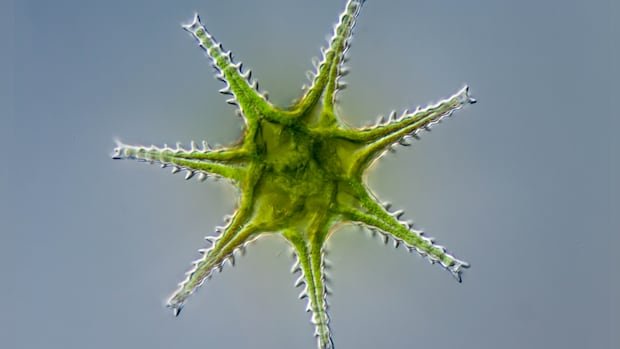
Although the restored bogs seemed visually appealing, Melkonian was disappointed to find only a few species of the diverse desmid algae he studies.
Viktoria Wagner, an associate professor at the University of Alberta, described this type of decline as a “silent form of loss.” She explained that species may not go extinct entirely but vanish from many places where they once thrived, decreasing the species count at individual sites.
Wagner identified this as “dark diversity” and uncovered evidence of it among plants in habitats worldwide. Algae, while not technically plants, are closely related.
Once species vanish from a specific location, Melkonian warned, they may struggle to return, and some may already be extinct locally.
While restoring landscapes is feasible, Wagner emphasized that it is challenging and not guaranteed to succeed every time.
The losses can have unseen repercussions. Despite their small size, algae play a pivotal role in global oxygen availability and food production.
Wagner noted that many species play vital roles in ecosystems, and when diversity diminishes, it can have cascading negative effects on other species.
In boreal forests, the slow recovery of many mosses, lichens, and other undergrowth plants after clear-cutting is not surprising. These species rely on shade and old-growth trees for habitat, elements that are absent in a harvested forest and take a considerable amount of time to regenerate.
Understanding these patterns could guide landscape managers, such as forest stewards, on how to preserve more species. Macdonald suggested that the research implies conifer forests might be harvested selectively or partially instead of clear-cutting.
Melkonian highlighted that algae habitats worldwide are under threat, along with the species inhabiting them. Many algae may appear inconspicuous, resembling a smear of color on snow or a patch of slime, forms that most people might not recognize as living organisms.
Melkonian meticulously collects these minute specimens from various habitats to preserve them. He and his colleagues have amassed and cultivated over 5,000 strains, creating an “algal zoo” to safeguard these species as living organisms.
For Wagner, the widespread loss of species underscores the necessity of more than protecting isolated habitat pockets to preserve biodiversity. It entails maintaining and restoring sufficient habitat for species to persist across landscapes continually.
She emphasized that loss is an ongoing process requiring active interventions to mitigate it.
This article is part