
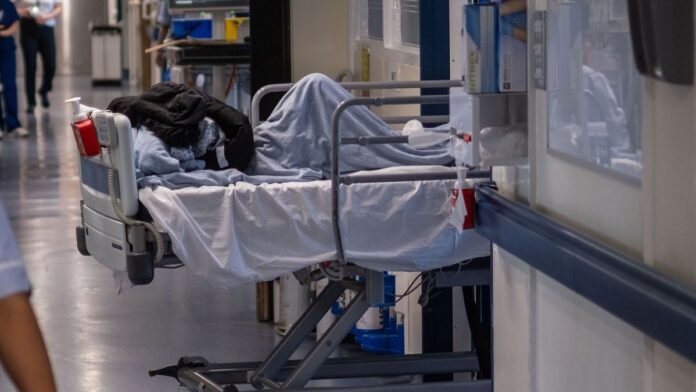
Almost 20% of patients seeking treatment in A&E departments in England during the summer were found to be receiving care on trolleys or chairs, according to a concerning new survey released today.
The Royal College of Emergency Medicine conducted the research, denouncing the practice of treating patients in corridors as a “national shame” that poses serious risks to lives. Surveying clinical leads responsible for A&E units, the organization highlighted the prevalence of patients being treated in inadequate conditions.
Illustrating the immense pressure on the NHS, the study revealed that 19% of patients were being attended to on trolleys or chairs in corridors, while 34% were even being cared for in ambulances outside the departments. Furthermore, a staggering 78% of respondents expressed concerns that patients were being harmed due to the compromised quality of care under such circumstances.
In a testimonial provided to the RCEM, a patient shared their distressing experience, stating that being left in a corridor made them feel forgotten and vulnerable, leading them to hesitate about seeking A&E care again unless absolutely necessary.
The research was compiled by the Royal College of Emergency Medicine for the All-Party Parliamentary Group on Emergency Care. A public poll conducted by Ispsos for the APPG also revealed that 58% of individuals lack confidence in the timeliness of care provided by A&E departments.
This report comes after a recent study by Age UK highlighted how elderly patients were left waiting in hospital corridors, witnessing distressing scenes. Dr. Ian Higginson, President of The Royal College of Emergency Medicine, condemned the situation, emphasizing that “corridor care” in England is a matter of national disgrace.
The need for better-funded social care to prevent patients from being treated in hospital corridors has been a subject of debate. Labour MP Rosena Allin-Khan, who chairs the APPG and works as an emergency doctor, emphasized the urgency of addressing the systemic issues that are putting patients at risk and undermining the dignity of care.
Responding to the research, Professor Nicola Ranger, General Secretary of the Royal College of Nursing, expressed deep concern over the prolonged suffering experienced by patients in emergency departments. Highlighting the overwhelming demand and inadequate staffing levels, she called for urgent action to address the declining care standards.
The Department of Health and Social Care acknowledged the severity of the situation, vowing to end the practice of corridor care and improve waiting conditions. With a significant investment planned for urgent and emergency care services, mental health crisis centers, and enhanced vaccination programs, the government aims to ensure that the NHS can provide prompt and quality care to those in need.