
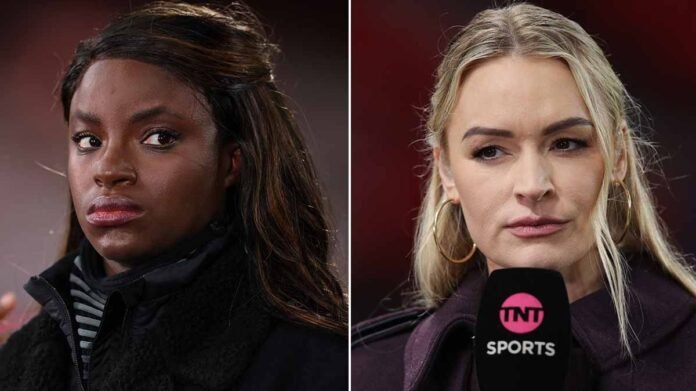
Some of the standout voices in men’s sports broadcasting are women. Kelly Cates, known for her exceptional presenting skills, remains highly sought after in the industry. Likewise, Gabby Logan has become a valuable regular contributor to Match of the Day.
Lucy Ward stands out for her superb analysis, providing unique insights into the game and its evolving patterns, making her a standout co-commentator. Additionally, Jules Breach excels as a post-match interviewer on the pitch, while Katie Shanahan’s work is also highly regarded for its excellence.
Laura Woods, a top-notch presenter, serves as an inspiration to many, showcasing a remarkable career journey that is particularly empowering for individuals with daughters. Her professionalism and skill set are widely acknowledged within the industry.
The landscape of men’s football coverage, being more established and high-profile than women’s football, presents a different context. However, diversifying voices in Premier League coverage remains crucial. The need for representation and inclusivity is evident, especially to engage broader audiences and promote gender equality.
Despite recent successes in women’s football, including increased viewership during back-to-back Euro championships, there is still progress to be made. The viewership figures for Women’s Super League (WSL) games, as reported by TV industry insiders, indicate room for growth and improvement.
Eni Aluko’s advocacy for informed and diverse voices in football coverage raises valid points. The industry’s shift towards inclusivity and professionalism is essential to elevate the game and cater to a wider audience. Addressing outdated attitudes and embracing change is key to advancing women’s football coverage.
The evolution of women’s presence in men’s football coverage reflects positive strides in the industry. Prominent figures like Laura Woods and Ian Wright demonstrate genuine interest and expertise in both men’s and women’s football, fostering mutual respect among players and fans.
While challenges persist, the industry’s commitment to talent diversity and professional growth is evident. Laura Woods’ journey from the ground up exemplifies the importance of meritocracy and hard work in achieving success in sports broadcasting.
In conclusion, fostering an inclusive environment and welcoming diverse talents are crucial steps towards advancing women’s football coverage and expanding viewership. Embracing change and promoting equality in sports media can lead to a more engaging and representative landscape for fans and professionals alike.