
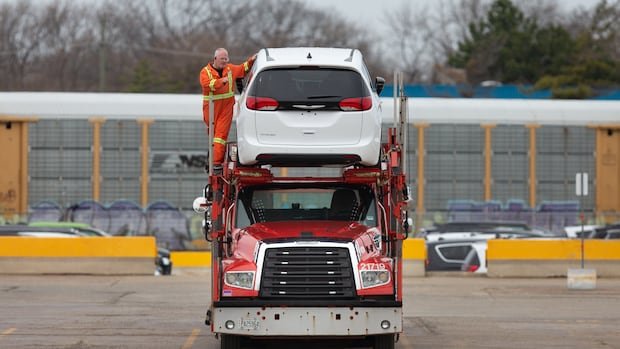
U.S. Trade Representative Jamieson Greer’s recent remarks on Canada’s auto industry highlight the challenges surrounding its integration within North America, potentially impacting future negotiations. President Donald Trump and Commerce Secretary Howard Lutnick have emphasized their desire to shift Canadian auto manufacturing jobs to the U.S.
In an exclusive interview with CBC News, Greer discussed the interconnectedness of the U.S. and Canada’s auto sectors, noting the gap in American manufacturing employment, particularly in areas like Michigan and Ohio. The focus, according to Greer, is on re-industrialization to benefit the U.S. while accommodating Canada’s interests.
Canada’s Ambassador to the U.S., Mark Wiseman, emphasized the importance of protecting the auto industry in Canada, underscoring its significance in Ontario and Quebec. The recent breakdown in trade talks highlighted unresolved issues, including U.S. tariffs on finished vehicles and Canadian auto parts.
Greer clarified that while auto tariffs were negotiable, separate discussions were needed for medium- and heavy-duty truck duties. Flavio Volpe of the Automotive Parts Manufacturers’ Association acknowledged the U.S.’s stance on domestic car production, echoing the administration’s preference for American-made vehicles.
Trump’s threat to increase tariffs on Canadian vehicles and non-CUSMA-compliant auto parts post-negotiation collapse raised concerns about the broader impact on the North American auto industry. Despite the challenges, stakeholders remain hopeful for a resolution to avoid escalating trade tensions and maintain the industry’s competitiveness.
Overall, industry leaders view ongoing discussions as crucial for safeguarding the auto sector’s future and ensuring mutually beneficial trade agreements between Canada and the U.S.