
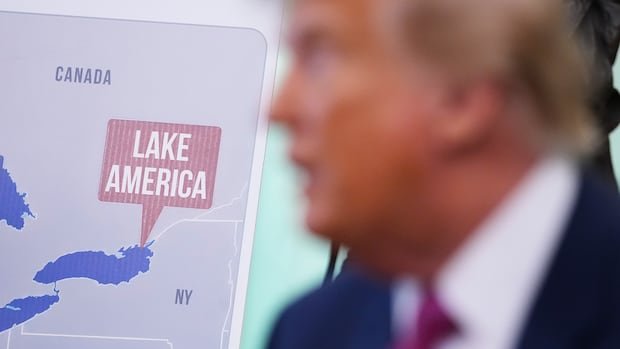
U.S. President Donald Trump has issued an executive order renaming Lake Ontario to “Lake America” amidst escalating tensions with Canada. Trump criticized Canada for demanding state-like treatment while accusing them of unfair practices towards the United States. He defended his actions by claiming that Canadian officials have mistreated the U.S., labeling them as “nasty people.”
The strained relations between the two countries intensified following the breakdown of trade talks, leading to mutual accusations of last-minute changes in negotiations. Prime Minister Mark Carney deemed the agreement unworkable, prompting the announcement of retaliatory measures effective from September 8.
The decision to rename the lake was initially threatened during a verbal dispute between Trump and Ontario Premier Doug Ford, where insults were exchanged. Interior Secretary Doug Burgum, a former North Dakota governor, expressed pride in the name change, emphasizing the importance of reflecting national greatness in the geographical names bordering the U.S.
In response, Canadian officials expressed disbelief and reaffirmed their commitment to calling the body of water Lake Ontario. Premier Tim Houston of Nova Scotia criticized the move, asserting that it will remain Lake Ontario. Meanwhile, Manitoba Premier Wab Kinew likened Trump’s actions to a fading rock star playing outdated tunes at a casino, suggesting that it was not the president’s finest moment.
Lake Ontario, part of the Great Lakes system, lies between Ontario and New York. Its name originates from the Huron Indigenous people’s term “oniatarí:io,” meaning “lake of shining waters.” Carney emphasized the historical significance of the name, which predates both Canada and the U.S. as sovereign nations.
This renaming incident echoes a similar event last year when Trump changed the Gulf of Mexico to the Gulf of America through an executive order, impacting federal documents and some online map services. The controversy surrounding this decision led to a dispute with The Associated Press, resulting in repercussions for journalistic coverage of the White House.
As the tariff war between the U.S. and Canada unfolds, public opinion varies on the implications of these trade disputes. Share your views on how the ongoing tensions are affecting you in light of this international trade conflict.