
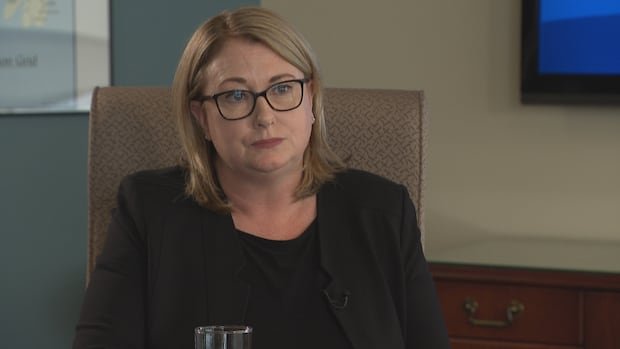
Newfoundland and Labrador Hydro’s CEO, Jennifer Williams, emphasized that the recent memorandum of understanding concerning Churchill River power is not paving the way for agreements similar to the 1969 power purchase deal with Churchill Falls (Labrador) Corporation (CFLCo). Williams expressed confidence in the new MOU during an interview with CBC’s Carolyn Stokes.
The 1969 contract, still in force, favored Hydro-Québec with low power rates for decades, leaving CFLCo with minimal benefits when electricity market prices surged. The latest three-way MOU among the province’s utilities, including CFLCo, was unveiled on Aug. 17. It outlines the potential terms for a new sales contract, along with substantial capital projects and power sales linked to the river.
Prime Minister Mark Carney, accompanied by former Quebec premier Christine Fréchette and N.L. Premier Tony Wakeham, hailed the agreement as “the biggest green energy initiative in North American history.”
Williams clarified that the electricity generated at the Churchill Falls power plant will not be sold at a fixed rate, despite the term “fixed rate” occasionally used in discussions. Under the proposed 50-year sales contract, the price for Churchill Falls power sold to Hydro-Québec until 2041 will escalate to 11.5 cents per kilowatt-hour, with an average annual price increase of 14% until then.
The renegotiated terms reflect Hydro-Québec’s willingness to terminate the existing contract early, leading to a higher price and extended agreement length. Additionally, the MOU enables further power generation on the river to support industrial growth in Labrador.
The MOU also sets the stage for agreements regarding the potential Gull Island development and a new transmission line in Labrador, alongside commitments for exploring additional energy projects. The agreement aims to finalize terms by the end of the year, with politicians scheduled to debate the MOU in the House of Assembly on Sept. 14.
Williams highlighted the collaborative effort to improve the agreement for all involved parties and emphasized the federal government’s role in financing the Gull Island project. The renegotiated MOU represents progress from the previous 2024 agreement, signaling a significant shift in Newfoundland and Labrador’s energy policy and goals.