
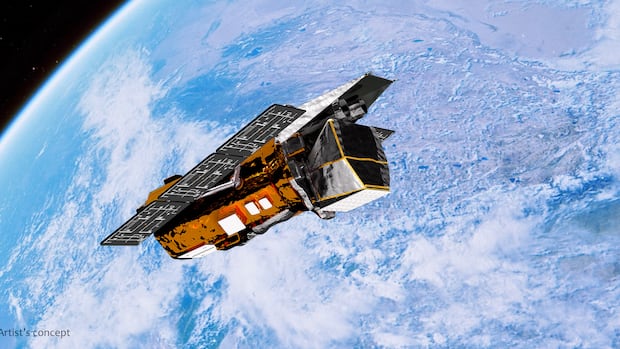
NASA’s top space telescope made its final descent to Earth on Wednesday, concluding its 22-year exploration of the universe’s largest explosions.
The end of the Swift Observatory occurred shortly after a daring rescue mission was unsuccessful less than three months prior.
The U.S. Space Force confirmed the reentry of Swift close to Indonesia, having monitored its failing orbit, which was influenced by significant solar activity over recent years.
To attempt an orbit boost, NASA engaged a private company, but Katalyst Space’s three-armed robotic vehicle encountered issues after its launch in July and ultimately fell back to Earth in September.
-
NASA telescope predicted to plunge back to Earth after failed rescue mission
-
NASA will no longer attempt to save its aging Swift space telescope
It remains unclear how much of the nearly 1.5-ton spacecraft disintegrated upon reentry. NASA expects that some of the heavier fragments may have survived.
Swift was launched into orbit in 2004, initially slated for a two-year mission focused on gamma-ray bursts and stellar explosions. Over its operational life, it observed thousands of these cosmic events, extending its mission to 11 times longer than originally intended, serving as a critical first responder for other telescopes that are capable of deeper investigations.
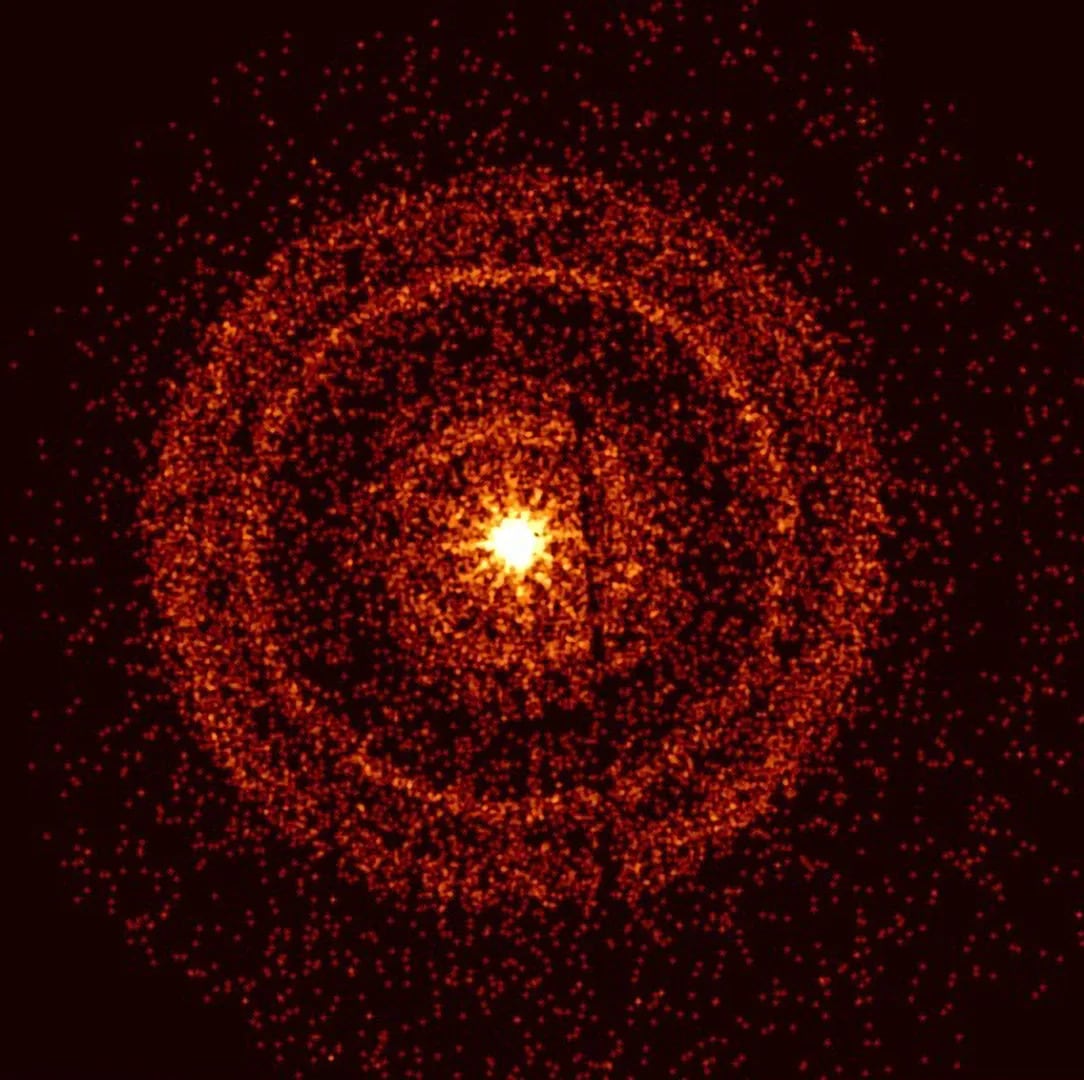
Swift’s X-Ray Telescope captured the afterglow of gamma-ray burst GRB 221009A about an hour after it was first detected. The bright rings form as a result of X-rays scattered from otherwise unobservable dust layers within our galaxy that lie in the direction of the burst. (NASA/Swift/A. Beardmore, University of Leicester)
NASA is currently assessing the potential for a rescue mission for another observatory, the Hubble Space Telescope, which is also facing orbital decline due to solar storms. Launched in 1990, Hubble is projected to fall back to Earth by the mid-2030s, based on recent evaluations.
The agency is seeking feedback from private firms regarding the feasibility of elevating Hubble’s orbit, upgrading its systems, guiding it towards a controlled reentry, or pursuing a combination of these options. Any such mission must be executed by 2032.
In contrast to the rush associated with Swift, NASA has more time to consider strategies for preserving Hubble, according to Nicky Fox, NASA’s science mission chief.
“Hubble still has significant scientific contributions ahead,” stated NASA Administrator Jared Isaacman. “We should explore every viable opportunity to keep it operational for as long as possible.”