


At the age of 26, Jessica Zbinden-Webster’s skin cancer diagnosis turned her understanding of sun safety upside down.
“I had always wrongly believed that skin cancer was a condition that primarily affected older individuals and those who excessively used tanning beds or sunbathed,” the West Sussex resident shared with As It Happens guest host Paul Hunter.
“Now, I am indeed a testament that it can strike anyone at any moment.”
Having recovered, Zbinden-Webster is dedicated to urging the U.K. government to eliminate the 20 percent tax on sunscreen. Canadian cancer organizations have advised CBC that this country should also evaluate the possibility of making sunscreen tax-exempt.
“Affordability is crucial since effective sun protection isn’t a one-time buy. Sunscreen must be applied generously and reapplied every two hours while exposed to the sun,” noted Falyn Katz, CEO of Melanoma Canada, in an email.
“For families, outdoor workers, and individuals spending considerable time outside, the costs can accumulate rapidly. Such expenses can create an additional hurdle for lower-income Canadians.”
A surprising diagnosis
Zbinden-Webster’s battle with cancer began in 2018 when she noticed what she believed was an unsightly blemish beneath her right eye.
“Throughout my youth and into my 20s, I dealt with many pimples,” she recounted. “I thought, ‘Great, another one to manage.’
However, after several months, the blemish persisted.
“One morning, while sitting at my desk, I touched the skin around my eye where the blemish was located, and it started to bleed. That was my warning sign. I decided to see my doctor the next day,” she explained.
“To my astonishment, he diagnosed me with skin cancer immediately.”
She was diagnosed with infiltrative basal cell carcinoma, a type of skin cancer that, while aggressive, is highly treatable and often challenging to detect as it can penetrate deep below the skin’s surface.
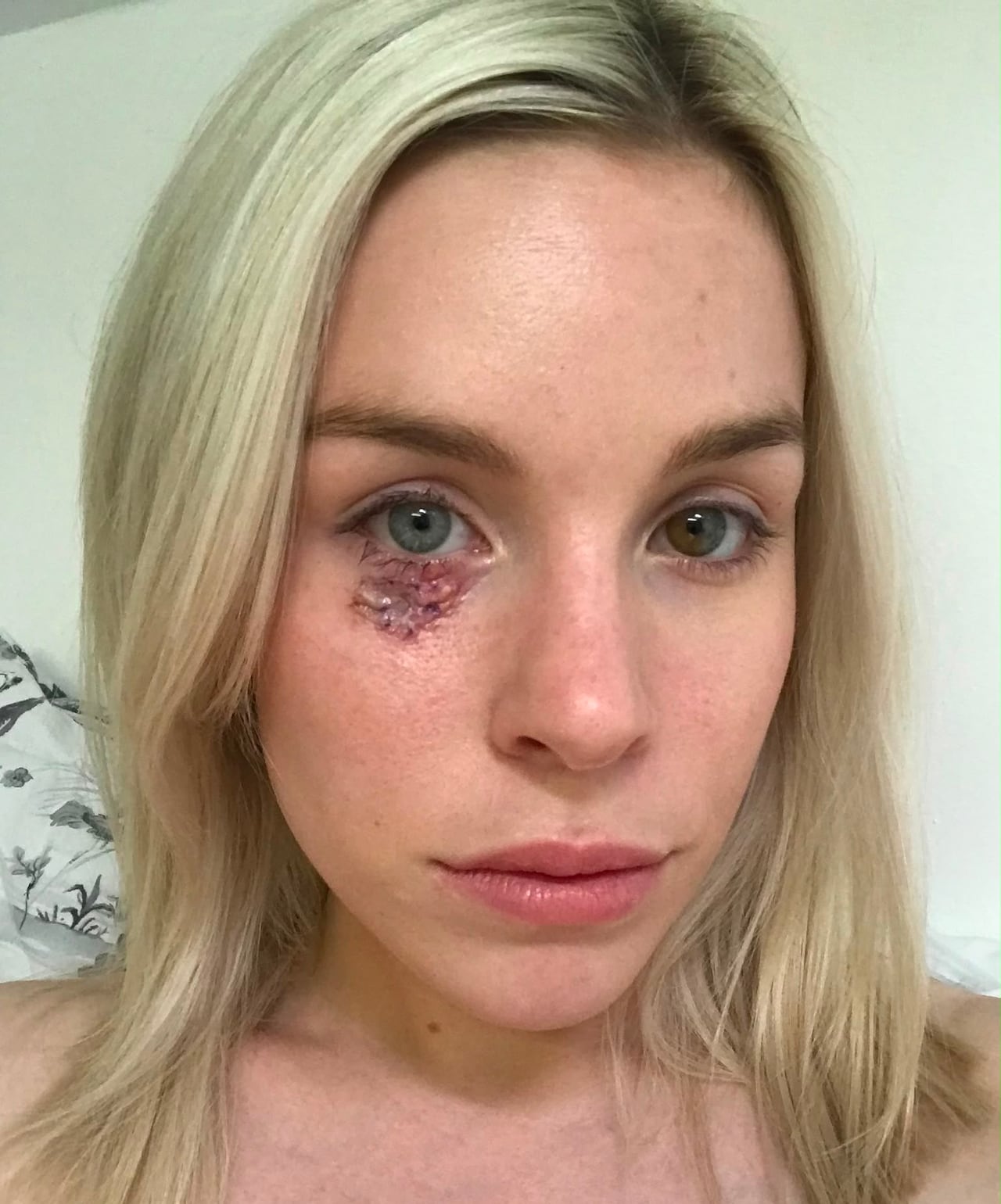
At 26, Zbinden-Webster was diagnosed with infiltrative basal cell carcinoma. (Submitted by Jessica Zbinden-Webster)
The Canadian Skin Cancer Foundation advises using sunscreen with a minimum SPF of 30 on all exposed skin whenever outdoors.
“I only applied sunscreen as most Brits do, treating it as a seasonal item. I would use it in the summer and more frequently when on vacation,” Zbinden-Webster said.
“However, I certainly did not view it as a daily necessity.”
The cost of daily sunscreen
That has changed. Now cancer-free following a successful surgery, Zbinden-Webster applies sunscreen every day.
While she considers it a beneficial routine, she also acknowledges that it can be costly.
In the U.K., non-prescription sunscreen is categorized as a cosmetic item and is subjected to a 20 percent value-added tax (VAT).
“This not only conveys a harmful message about the significance of sun safety for public health, but it also makes skin cancer prevention unaffordable for the most vulnerable,” Zbinden-Webster stated.

Individuals applying sunscreen at an Ottawa beach in 2024. The Canadian Skin Cancer Foundation recommends that all Canadians use sunscreen with an SPF of 30 or higher when outdoors and reapply every two to three hours. (Justin Tang/The Canadian Press)
Zbinden-Webster’s online petition titled “Tell the Government to axe VAT on Sunscreen” has attracted over 100,000 signatures.
She is not alone in her efforts. Numerous U.K. skin health organizations, including Melanoma Focus, are also advocating for the removal of VAT from sun protection products with an SPF of 30 or higher.
A 2026 report from the U.K. parliamentary UV Safety Inquiry echoed this recommendation.
While CBC was unable to obtain a comment from the U.K. government, a spokesperson told the BBC: “As part of our 10-year plan to reform the health service, and through a national cancer plan, we will combat cancer on all fronts, from prevention to diagnosis, treatment, and research.”
What about Canada?
In Canada, sunscreen is classified as a health product.
However, similar to numerous health care products, it is also subject to a five percent federal Goods and Services Tax, in addition to provincial and harmonized sales taxes that vary by region.
“From our viewpoint, there is a discrepancy between acknowledging sunscreen as a regulated health product and a vital cancer prevention tool, while still taxing it like a regular consumer item,” remarked Katz from Melanoma Canada.
Lindsay Timm, executive director of the Canadian Cancer Survivor Network, expressed support for any initiative aimed at improving sunscreen accessibility, such as making it available for free in parks, outdoor swimming pools, and hiking paths.
“We believe that enhancing the affordability and accessibility of sunscreen is a commendable objective for all nations, including Canada,” she noted in an email.

Experts note that while sun exposure is increasing in Canada, sunscreen usage is declining. Skin cancer rates are also on the rise. In Quebec, the incidence of melanoma per 100,000 individuals has surged by over 430 percent in the past thirty years, according to Statistics Canada.
Health Canada directed inquiries regarding the sunscreen tax to the Department of Finance Canada.
“Applying the GST/HST to a wide range of goods and services helps maintain a more efficient, simpler, and lower tax system,” Finance Canada stated in an email response.
A small number of essential items — including prescription medications, medical devices, menstrual hygiene products, and certain groceries — are exempt from tax in Canada.
When asked if the government would contemplate adding sunscreen to that exemption, the department replied: “The government consistently reviews the tax system to ensure its effectiveness and efficiency and will continue to do so.”
-
Cancer remains top cause of death in Canada as new study shows multiple types rising
-
Marketplace
Why you shouldn’t count on SPF for all of your sun protection
Zbinden-Webster acknowledges that it is easy to become overwhelmed by the red tape.
However, she reflects on Australia, where sunscreen with an SPF of 15 or higher has long been exempt from the 10 percent Goods and Services Tax.
“There is a glimmer of hope,” she remarked. “It has been accomplished before, and it can be achieved again.”