
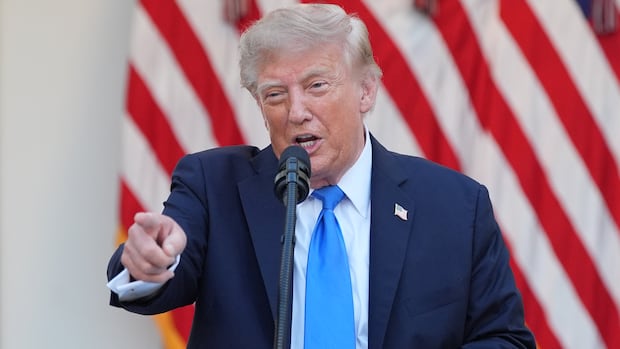
U.S. President Donald Trump has pledged to join forces with Republicans facing tough battles in their Congressional elections during the imminent midterm elections.
A number of Democrats are quietly wishing that Trump will fulfill this commitment.
The midterm elections set for November 3 will decide which party will dominate the U.S. Senate and House of Representatives for the next two years.
Historically, midterms have not favored the party of the sitting president, especially when that president’s approval ratings are as low as Trump’s.
Despite this, Trump appears determined to remain in the campaign limelight, even as evidence suggests he may be hindering Republican candidates’ chances instead of bolstering their support.
“I will be traveling around and giving many speeches,” Trump stated during a meeting with Congressional Republicans at the White House on Wednesday evening.
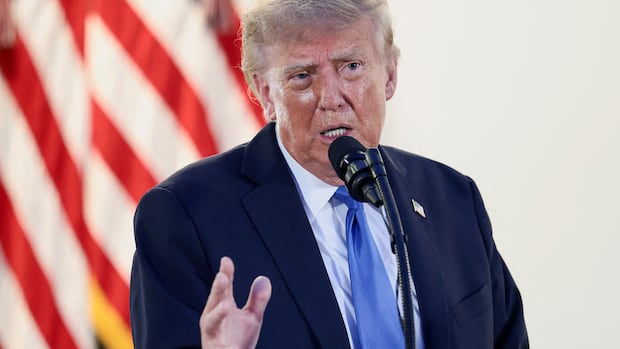
Republicans are openly endorsing President Donald Trump’s trade conflict with Canada, despite polls indicating that a majority of Americans oppose it. Trump himself showed no intent to retreat after directing fresh insults at Ontario Premier Doug Ford, whom he labeled ‘the slob.’
He mentioned concentrating his efforts on 35 crucial races for the Senate and the House.
“I will visit each of those 35 locations,” Trump assured the Republican legislators.
“I’ll be in every one of your states, your cities, wherever your campaign is taking place,” he added. “From now until November 3 and beyond, we are going to support you.”
Some Republicans minimize Trump’s influence in campaigning
A significant question for the midterms will be whether Trump’s strategy to take on a prominent role helps or hinders GOP candidates in those competitive races.
Several Republicans in closely contested districts are already downplaying Trump in their campaign messages and eliminating mentions of him from their websites, according to a report by The Associated Press last week.
Republicans in tightly contested districts and purple states face a dilemma regarding how closely to associate their campaigns with Trump, states Alex Theodoridis, a professor at the University of Massachusetts Amherst and co-director of UMass Poll.
“Much of their base that they need to mobilize for any chance in a swing district really expects them to support President Trump,” Theodoridis told CBC News.
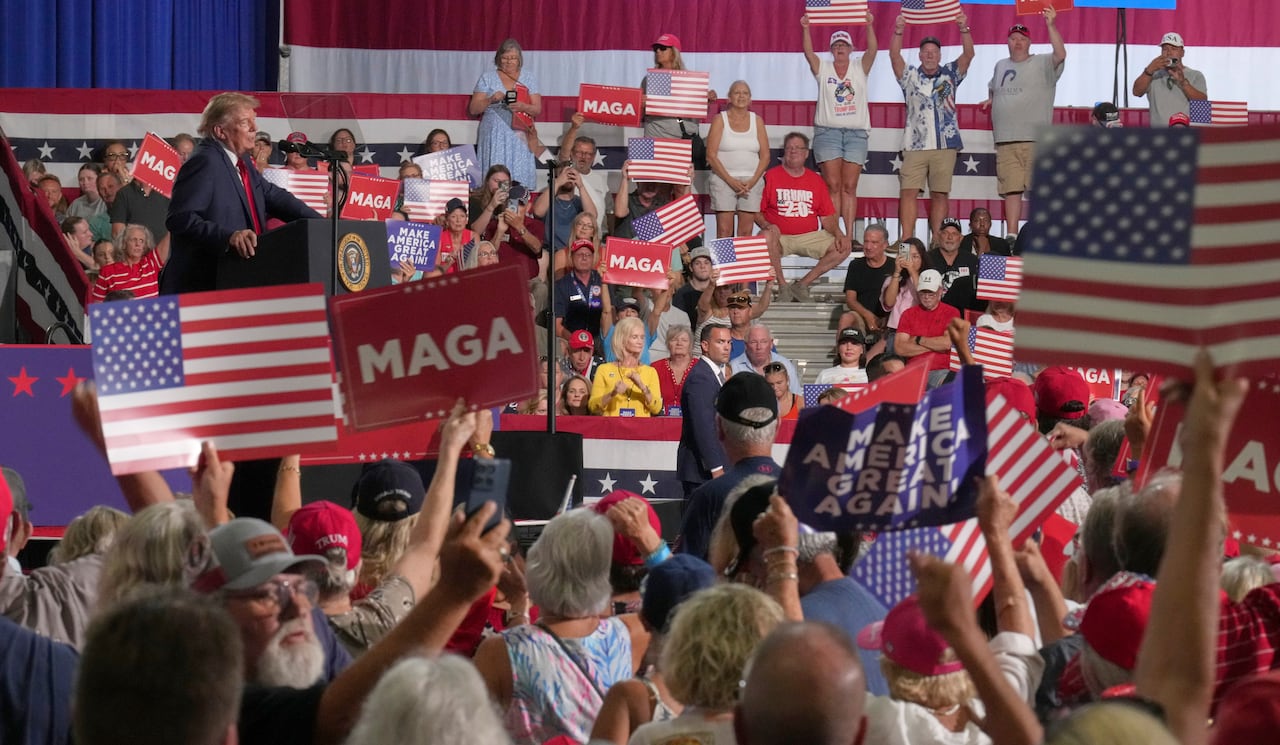
Trump continues to attract crowds of supporters from his Make America Great Again faction of the Republican Party, as demonstrated at this campaign rally for South Carolina Sen. Darline Graham in Myrtle Beach, S.C., on August 21. (Jacquelyn Martin/The Associated Press)
He notes that Trump has been effective at energizing his core supporters, those aligned with the president’s Make America Great Again movement within the Republican Party.
However, relying solely on MAGA voters is insufficient to secure victories in close races. Numerous independent voters and some moderate Republicans who previously supported Trump in the 2024 presidential election have since turned against him and may impact midterm outcomes by abstaining from voting.
For Republicans contesting in swing districts and purple states, this creates “a tightrope act,” according to Theodoridis.
“It’s a complicated situation. Candidates currently must distance themselves from the president, but not excessively so.”
The latest UMass national poll shows Trump’s overall approval rating at 32 percent, marking the lowest point during his presidency. The poll was conducted online from August 21 to 26, involving a sample of 1,000 adults reflective of the gender, age, race, and education demographic of the U.S. populace.
In representative polls published, Trump’s average approval rating currently hovers around 38 percent, according to the Silver Bulletin polling aggregator.
More than two-thirds of participants in the UMass poll expressed disapproval of Trump’s approach to the conflict with Iran, while three-quarters disapproved of his handling of inflation.
Notably, the UMass survey indicates a decline in Trump’s approval rating among political independents and non-MAGA Republicans, whose support was crucial for his return to the White House.
‘Send Trump to every swing district’
Voters who remain undecided about whom to support in the midterms are four times more likely to view Trump’s endorsement of a candidate as a detriment rather than an advantage, based on a YouGov/The Economist poll conducted online from August 28 to 31 among a representative sample of 1,592 U.S. adults.
Such polling results have led to some Democrats eagerly anticipating Trump’s high visibility in the midterm campaign, including Ted Lieu, vice chair of the House Democratic Caucus.
“I urge the White House to deploy Donald Trump to every swing district across America,” Lieu stated during a recent press conference. “He can articulate to the American populace in those areas why gas prices are rising and why the cost of living is increasing.”
This perspective views Trump as a significant motivator for Democrats to head to the polls during the midterms while potentially failing to energize Republican turnout.
-
With U.S. midterm elections looming, Democrats are clashing over how to win
-
Republicans back Trump in his trade war with Canada
The two primary factors that predict the outcome of U.S. midterms are the approval rating of the current president and the enthusiasm level for voting among each party’s registered supporters, according to Al Hunt, co-host of the Politics War Room podcast alongside seasoned Democratic strategist James Carville.
Hunt noted that Trump’s approval rating is “exceptionally low,” suggesting that this positions Democrats for “significant gains” in the midterms.
“The economy and the war, both major negatives for the GOP, will not improve before election day.”
However, this does not guarantee that the midterms will result in both the House and the Senate favoring Democrats. Trump seems ready to dedicate much of the next two months to convincing voters that handing control of Congress to his opponents will exacerbate the cost of living crisis.