
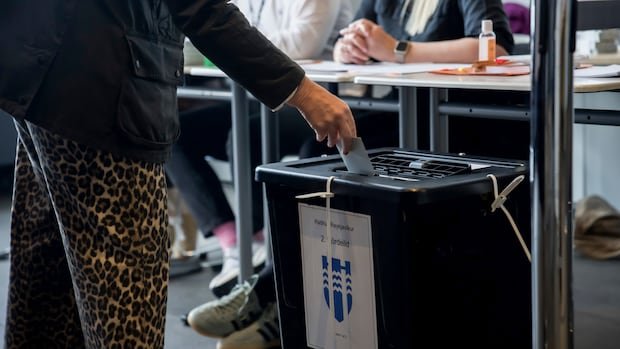
Voters in Iceland participated in a crucial referendum on Saturday to determine whether the country should reopen discussions to potentially join the European Union, amidst concerns raised by U.S. President Donald Trump regarding the control of nearby Greenland.
The referendum presented a straightforward question to the approximately 265,000 eligible voters: Should Iceland resume talks with the European Union for potential membership? A positive vote would initiate negotiations with the European Commission, covering various aspects from the economy to human rights. Proponents believe that EU membership could provide a shield against potential threats from Trump and offer economic stability.
On the contrary, rejecting the proposal would halt any further discussions for at least a generation. Critics argue that EU membership could jeopardize Iceland’s abundant fishing resources and point out that the country already benefits from being part of the EU’s single market and the Schengen area.
Anticipating a close outcome, over 20% of voters cast their ballots early. Concerns have been raised in Iceland due to Trump’s interest in Greenland, which is in close proximity to the country, fueling uncertainties about potential future ambitions in the region.
Iceland’s historical debate on EU membership resurfaced during the referendum, as the country formally terminated its previous application in 2015 due to concerns over the impact on its valuable fish reserves. Fishing, a cornerstone of Iceland’s economy and heritage, has been a key topic leading up to the referendum.
Joining the EU would require Iceland to adhere to the bloc’s fisheries policy, allowing foreign trawlers access to its waters. The government has indicated a desire for a special agreement, potentially exempting Iceland from certain EU regulations.
As the referendum approached, Prime Minister Kristrún Frostadóttir emphasized that the vote was not final and that another referendum would follow if Iceland reached a membership agreement with the EU.
The decision on EU membership for Iceland is seen as not just a political but a cultural choice, with national identity and independence at stake. Supporters of EU membership argue that closer ties with European neighbors are necessary to address transnational issues like climate change. Conversely, opponents believe that Iceland’s current arrangements already offer the benefits of European integration without compromising sovereignty, pointing to advantageous trade agreements as evidence.
Former Prime Minister Katrín Jakobsdóttir expressed her belief that Iceland’s interests are better served by maintaining close collaboration with the EU while staying outside the union.