
Wildlife in Newfoundland’s forests has been wreaking havoc on the equipment of a dedicated wildfire researcher, Lucas Brehaut. Brehaut, a scientist with the Canadian Forest Service, is investigating forest regeneration post-wildfires in Atlantic Canada. Despite the cooler and wetter climate of the region, wildfires are becoming more frequent due to climate change.
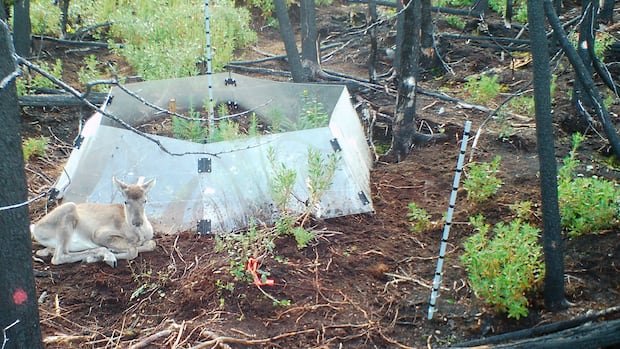
Following a forest fire near Grand Falls-Windsor in 2022, Brehaut embarked on a study to observe forest regrowth under warming conditions. Utilizing 19 open-top chambers (OTCs), resembling mini greenhouses, the research team monitored seedlings’ growth by increasing temperatures by one to three degrees to simulate a warming planet. The study is currently in its third year out of five.
However, Brehaut encountered unexpected challenges during a routine check-in in September 2023. Various wildlife, including caribou, moose, black bears, rabbits, coyotes, and owls, were caught on camera tampering with the equipment. Notably, the animals not only trampled the greenhouses but also absconded with temperature sensors, causing significant damage to 11 out of the 19 sites.
Despite the setbacks, Brehaut remains understanding, acknowledging the animals’ curiosity and natural behavior within their habitat. Kaitlyn Gaynor, an assistant professor at the University of British Columbia, explains that animals, like bears, are naturally inquisitive about novel objects in their environment and may investigate them for potential resources or threats.
Moreover, Gaynor highlights that human scent on equipment can attract animals, leading to interference. She suggests minimizing disturbance by reducing scent, quick field visits, and camouflaging equipment. Animal disruptions in research are not unique to Newfoundland, as Gaynor has experienced similar encounters with wildlife during fieldwork in Mozambique, with elephants being notorious for causing damage.
In addition to wildlife, Brehaut has also faced challenges from human activities, such as snowmobiles inadvertently damaging research plots during snowy winters in Newfoundland. Despite these obstacles, Brehaut remains committed to his study, recognizing the delicate balance between research endeavors and the wildlife that inhabit these environments.