
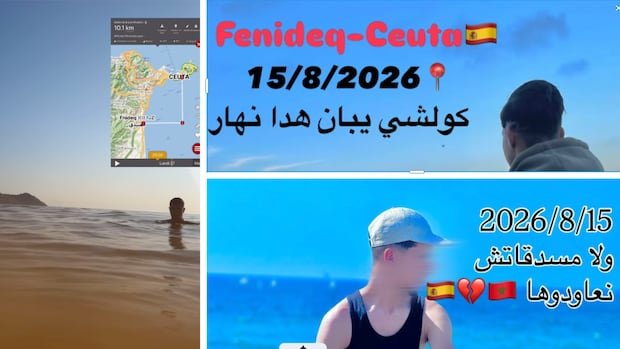
In the lead-up to the recent surge of migrants to Europe, a brief Instagram video went viral with 1.4 million views. The video depicted a young man partially submerged in water with a map showing a sea route from Fnideq, Morocco, to Ceuta, a Spanish enclave in Africa. This video, along with other posts on platforms like Instagram and TikTok, seemed to have influenced the mobilization of two waves of irregular migration from Morocco to Ceuta, resulting in numerous arrests.
Various online communities focused on migration-related content, such as music and memes, played a role in these events. There is ongoing debate among governments and organizations regarding the orchestration of the Ceuta situation and whether migration was manipulated for political purposes. However, it is evident that misinformation spread through multiple online channels contributed to the influx of migrants to Ceuta this summer.
CBC’s visual investigations team, with support from the investigative collective Bellingcat, identified multiple social media accounts on Instagram that were active before the initial wave on July 30. Misinformation suggesting that a Spanish court ruling would allow migrants to enter the country by sea triggered a surge in posts, leading to over 72,000 people crossing the border on that day.
While most of the migrants from July 30 have returned to Morocco, around 5,000 remain in Ceuta, with some living on a beach with assistance from charities. Tragically, nearly 100 individuals lost their lives attempting the crossing.
The role of social media in shaping these events has raised concerns. Accounts on platforms like Instagram directed followers to WhatsApp chats for coordinating crossings, with some offering advice for a fee. Despite efforts by Meta and TikTok to fact-check posts to prevent exploitation, a new wave of posts emerged ahead of August 15, encouraging another attempt to enter Spain.
The surge of migrants to Ceuta highlights the impact of misinformation and manipulation on vulnerable populations seeking better opportunities. The widespread use of social media to promote migration has underscored the desperation and disillusionment among youth in North Africa and beyond.
As authorities in Morocco and Spain cracked down on the August 15 crossing, it became clear that social media played a pivotal role in shaping perceptions and actions related to migration. The desire to migrate existed independently of social media influence, but the online messaging amplified the sense of urgency for many individuals seeking a better life in Europe.