
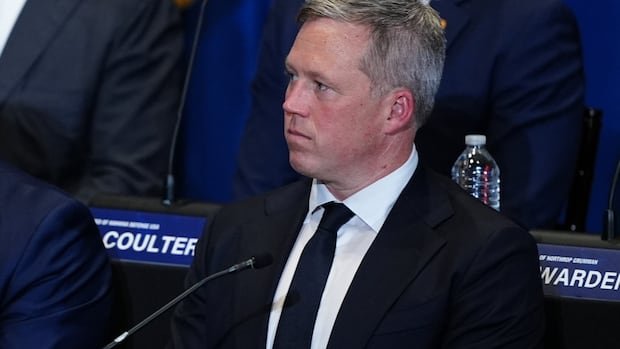
U.S. Army Secretary Dan Driscoll has announced his resignation after serving for 18 months, according to the White House statement released on Monday. This departure adds to the recent turnover in high-ranking military positions within President Donald Trump’s administration. While no specific reason was provided for Driscoll’s exit, tensions with Secretary of War Pete Hegseth have been widely acknowledged, contributing to ongoing changes in military leadership, particularly within the army.
White House spokesperson Anna Kelly praised Driscoll for his significant contributions to advancing President Trump’s military agenda, emphasizing his leadership during critical military operations, emphasis on readiness and lethality, and facilitation of negotiations between Russia and Ukraine. She highlighted the strengthened position of the United States army due to Driscoll’s collaborative efforts with the commander-in-chief and the secretary of war.
Notably, Navy Secretary John Phelan was the first military service head to depart during Trump’s second term, as announced abruptly by the Pentagon in April. Additionally, Gen. Randy George, the army’s top uniformed leader, was removed by Hegseth in April, followed by the unexpected resignation of Gen. Christopher Donahue, the army’s commander in Europe and Africa, in June.
Under the leadership of Hegseth, Gen. Christopher LaNeve has assumed the role of acting chief of staff in place of George. LaNeve has initiated changes, including discontinuing a drone modernization program previously championed by Driscoll. This decision led an army unit based in Europe to cease drone development efforts and revert to operating as a traditional infantry battalion.
Driscoll, who expressed his disappointment at George’s departure, received bipartisan support from lawmakers following his resignation. Acknowledging the civilian leadership’s prerogative in selecting military leaders, Driscoll emphasized the established system in place for leadership appointments.
Described by Trump as “a disruptor and change agent,” Driscoll, an Iraq war veteran and tech investor, played a pivotal role as the army secretary. He was instrumental in negotiating peace efforts between Russia and Ukraine and advocated for streamlining processes to enhance drone development and counter-drone capabilities in response to evolving global warfare dynamics.
Confirmed by the U.S. Senate in February 2025 with a vote of 66-28, Driscoll’s appointment focused on modernizing army systems, enhancing recruitment strategies, and strengthening the military industrial base. With a family legacy of military service, Driscoll’s dedication to prioritizing soldier welfare was evident throughout his tenure. His previous military experience includes serving as an armour officer from August 2007 to March 2011, with a deployment to Iraq from October 2009 to July 2010.
In addition to his military background, Driscoll entered the political arena by running in the Republican primary for a North Carolina congressional seat in 2020, securing approximately eight percent of the vote within a competitive candidate field.