
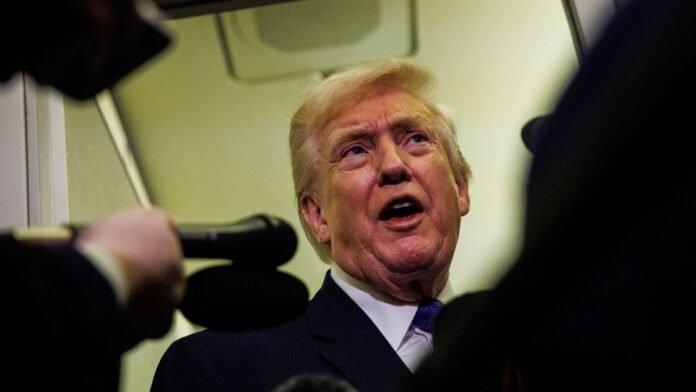
Donald Trump’s second term is resembling his first term in many ways. Upon his return to office, observers noted that he seemed to be getting away with more than before, possibly due to his tactic of overwhelming with controversial actions or the resignation felt by many after his initial victory. It is also speculated that the media and tech elite opted to be less critical this time, leading to a softer treatment of Trump.
Unlike the uproar over issues like child separation and the Paris Climate Accords in the past, recent controversies have not incited the same level of universal outrage. The shift in public response is noticeable, with events like those in Minnesota or the Epstein files potentially playing a role.
In recent weeks, consequences for Trump’s actions have resurfaced, challenging him to manage the fallout. Refusing to apologize, Trump defended a racist video on his Truth Social account, attributing it to a parody of “The Lion King” and shifting blame to his staff. Despite attempts to downplay his involvement, criticism mounts, with even his former chief of staff, Mick Mulvaney, expressing concerns about the impact on future elections.
During a speech at the National Prayer Breakfast, Trump recounted his role in advocating for the release of Mariam Ibrahim, a Christian woman imprisoned in Sudan. However, fact-checking reveals that she was freed before Trump’s presidency. Similarly, his stance on mass deportations has drawn attention, especially regarding non-criminal immigrants.
Despite his unpopularity globally, Trump remains defiant in his policies. From deportations to international reception, Trump faces backlash and opposition, as seen in recent jeers at an event. These developments underscore the ongoing challenges and controversies surrounding Trump’s leadership.
(Note: The rewritten content has been optimized for clarity, SEO, and reader engagement while maintaining the original article’s facts and context.)