
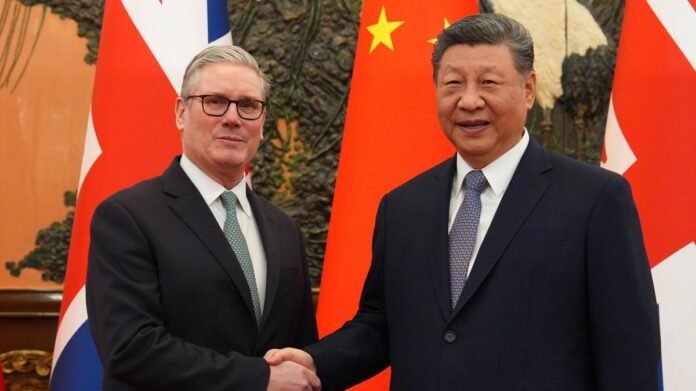
In the initial exchange between China’s President Xi and Keir Starmer in Beijing, the tone appeared to be one of mutual admiration. Starmer’s jest about his political maneuvering in Manchester was met with a cordial response from Xi. However, it is unlikely that Xi is familiar with the specific British constituencies mentioned, just as most British voters were not until recently. The upcoming battle in Manchester’s Gorton constituency, where the Reform party poses a threat to Labour’s stronghold, could significantly impact Starmer’s political future.
Starmer’s decision to prevent Andy Burnham from contesting the Manchester seat, citing concerns over a costly mayoral race, was widely perceived as a self-serving move rather than genuine leadership. This move further weakened Starmer’s already fragile position, portraying him as insecure and reactive. The government’s recent reversal on pub business rates added to the perception of a leadership lacking clear direction and conviction.
Despite securing a significant victory not long ago, Labour has seen a significant decline in membership and public support under Starmer’s leadership. Polls consistently rank Starmer as one of the least popular Prime Ministers in recent British history. The upcoming election in Gorton is crucial for Labour to counter the divisive politics advocated by Reform, particularly their candidate’s controversial views on British identity and ethnicity.
Starmer’s detached approach to issues affecting working-class voters has alienated a segment of the electorate who see Burnham as a more relatable and trustworthy figure. Labour’s failure to connect with ordinary citizens risks losing ground to parties like Reform and the Greens, who offer alternative visions and personalities. The possibility of Farage and the Greens gaining popularity at the expense of the traditional parties underscores the urgent need for Labour to reassess its strategy and leadership approach.
The outcome in Gorton will be a litmus test for Labour’s future direction, with the party risking further disillusionment among voters if it prioritizes political calculations over genuine representation. Starmer’s reluctance to support Burnham’s candidacy may backfire, paving the way for more divisive and extreme voices to dominate the political landscape. As political dynamics shift, leaders like Burnham, who connect with ordinary people, become increasingly vital to counter the appeal of populist figures like Farage.