
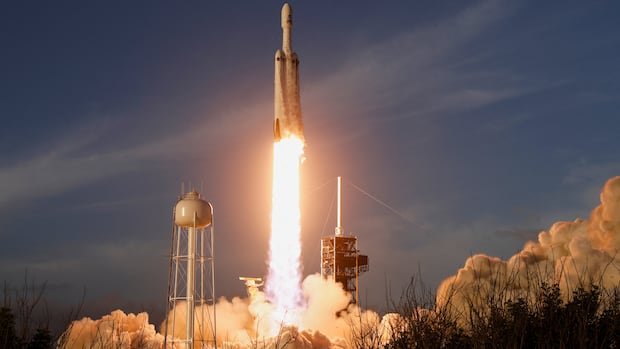
NASA has initiated a groundbreaking mission to explore key mysteries in astrophysics and cosmology by launching the Nancy Grace Roman Space Telescope, the new flagship astronomical observatory. The telescope, repurposed from a spy satellite, aims to capture panoramic views of the cosmos. Costing approximately $4 billion, the telescope was launched from NASA’s Kennedy Space Center in Cape Canaveral, Fla., aboard a SpaceX Falcon Heavy rocket. Its primary mission is set for five years, with the potential for a five-year extension based on fuel availability.
The Nancy Grace Roman Space Telescope is designed to delve into cosmic puzzles such as dark energy, dark matter, gravitational studies on large scales, and the search for exoplanets. Positioned in orbit beyond the moon, the telescope will explore space towards an orbital location known as Lagrange Point 2, about 1.6 million kilometers from Earth. Named after NASA’s pioneering chief astronomer, the telescope will undergo a 90-day commissioning period before commencing its scientific operations. Scientists anticipate the telescope to transmit its initial high-resolution images before the upcoming winter holidays.
NASA officials expressed confidence that the Nancy Grace Roman Space Telescope will become as renowned as other prominent orbiting observatories like the James Webb Space Telescope and the Hubble Space Telescope. The telescope is expected to offer comprehensive insights into the universe’s early history and structure, complementing the deep views provided by the Webb Telescope. With the ability to survey the entire Milky Way galaxy in a month, the Roman telescope is poised to significantly enhance our understanding of dark energy, dark matter, and the broader cosmic landscape.
The launch of the Roman telescope, which was repurposed from a National Reconnaissance Office spy satellite program, marks a significant achievement for NASA’s space exploration initiatives. Despite past attempts to cancel or reduce funding for the project, the telescope’s successful launch, nine months ahead of schedule, underscores its importance in advancing our knowledge of the universe’s fundamental components. Through its cutting-edge capabilities, including panoramic views and a comprehensive search for exoplanets, the Nancy Grace Roman Space Telescope is poised to revolutionize our understanding of the cosmos.