
At twilight, during a recent solar eclipse in northern France, a group of individuals, including women and toddlers, gathered at a highway bus stop with orange life jackets. They had been camping in nearby woods for months, waiting for a chance to board a boat and cross the English Channel. Despite facing challenges from the police, who have reportedly used tear gas to deter them, the migrants highlighted the increasing difficulties of crossing the Channel from France.
The region between Dunkirk and Calais has long been a hub for migrants passing through Europe. Recently, although the overall number of crossings has decreased, the boats are carrying more migrants, taking longer routes and facing higher risks. This trend coincides with a broader European debate on migration, following a significant influx of migrants at the Spain-Morocco border in Ceuta.
British politicians, including Nigel Farage, have raised concerns about migrants crossing the Channel. Calls for the Royal Navy to intercept boats have been made, but feasibility remains a question. Efforts to prevent crossings have intensified, with increased funding for French police operations leading to a crackdown on departures and informal settlements in Calais.
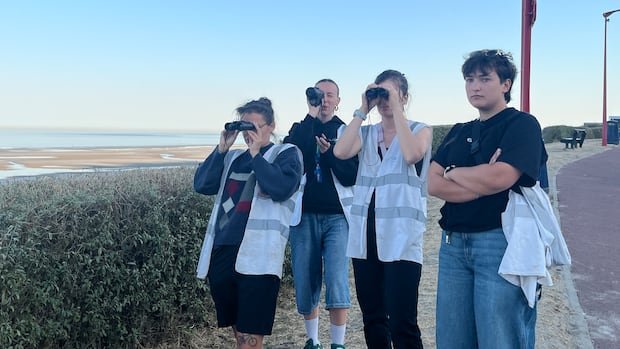
Despite fewer overall crossings, migrants continue to attempt the journey, often resorting to more dangerous and longer routes. Aid workers and volunteers from organizations like Calais Appeal provide support to migrants stranded in Calais and Dunkirk after failed attempts to cross the Channel. The reliance on citizen groups underscores the gaps in official rescue and humanitarian operations.
The risks faced by migrants remain high, with incidents of overcrowded boats and dangerous crossings. Smugglers have adapted tactics, using larger vessels and launching inflatable boats from remote points to avoid detection. Humanitarian efforts by citizen groups aim to assist migrants and raise awareness of the hazards they face on their journey.
The stories of individual migrants, like Mohammed from Gaza, shed light on the personal struggles and motivations behind their journeys. Despite facing hardships and risks, the desire for safety and better opportunities drives many migrants to continue their quest to reach destinations like the U.K.
Local communities, like Ambleteuse, express concerns about the increasing dangers of crossing the Channel and the need for coordinated international efforts to address migration challenges. The responsibility for managing migration goes beyond individual countries and requires a collaborative approach to finding sustainable solutions.
As migration issues escalate, there is a growing recognition of the need for comprehensive strategies at the global level to address the root causes and complexities of migration flows.