
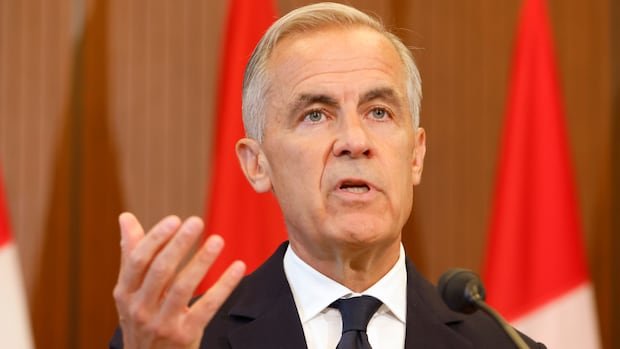
The Conservative Party is calling on Prime Minister Mark Carney’s administration to disclose “comprehensive information” regarding the failed Canada-U.S. trade agreement that was under discussion before talks collapsed over the weekend. Conservative Member of Parliament Shuvaloy Majumdar, who serves as the party’s shadow minister for Canada-U.S. relations, emphasized in a letter to Canada-U.S. Trade Minister Dominic LeBlanc that the Conservatives are not requesting confidential negotiation details. Instead, they are seeking transparency on matters already known to Ottawa and Washington. Majumdar highlighted that this data would enable Canadians to engage in discussions and deliberations about the nation’s future direction.
Following the breakdown of extended trade negotiations between the two nations, the implementation of 50% U.S. tariffs on approximately $28 billion worth of Canadian products commenced early on Saturday. Prime Minister Mark Carney stated during a press briefing that Canadian negotiators opted to withdraw from the discussions due to what he deemed as unacceptable demands from the United States. Carney specified that these demands included attempts to limit Canada’s capacity to engage in other trade agreements. He asserted that his government would retaliate with equivalent tariffs on U.S. goods starting on September 8, emphasizing the commitment to safeguard Canada’s sovereignty and key industries.
U.S. Trade Representative Jamieson Greer indicated that the negotiations failed due to “new demands and retractions of previous commitments by Canada.” Greer outlined that the U.S. proposal aimed at fostering supply chain coordination in aerospace, addressing unfair trade practices, enhancing cooperation on critical minerals, bolstering enforcement against imports produced through forced labor, and initiating formal negotiations under the U.S.-Mexico-Canada Agreement. Additionally, Greer mentioned in a statement released early Saturday that the U.S. administration had suggested reducing tariffs on softwood lumber by 10% and lowering steel tariffs from 50% to 25%.
Despite the absence of official details on the negotiated deal, the decision by Carney to walk away from the talks has received broad support in Canada, including endorsements from provincial leaders such as Ontario Premier Doug Ford and B.C. Premier David Eby. Many individuals have also expressed approval for Carney’s intention to reciprocate with tariffs on U.S. imports next month. Amid concerns over the escalating trade dispute’s impact on the economy and citizens’ daily lives, David Coletto, the founder and CEO of the Abacus Data polling firm, noted a prevailing sentiment among Canadians to resist perceived bullying tactics from U.S. President Donald Trump. Opposition party figures have echoed the sentiment, urging unity in countering the imposition of tariffs and advocating for fair trade agreements.
Conservative Party leader Pierre Poilievre emphasized that Canada cannot afford one-sided tariffs that could harm its industrial sector or accept unfavorable deals. Poilievre emphasized the need to champion tariff-free trade and vowed to collaborate with Carney to protect Canadian workers, businesses, and the economy. Carney indicated that briefing opposition leaders on the trade developments would likely occur in the coming days, demonstrating a willingness to engage in discussions to address the ongoing trade challenges.