
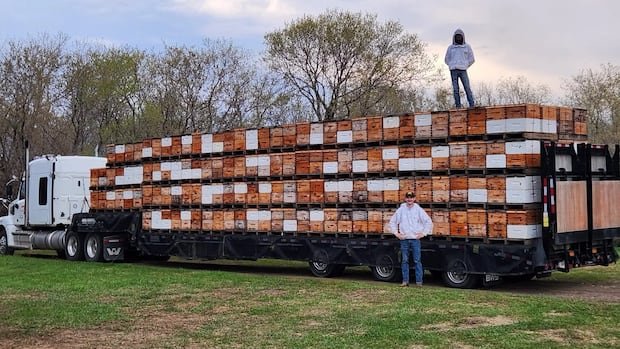
Osee Podolsky, who manages Podolski Honey Farms, expressed concerns about the impact of the recent tariffs imposed by the U.S. on Canadian goods, including honey. The family business, based in Ethelbert, Manitoba, primarily ships its honey to customers in the United States. Podolsky fears that the farm, established by his grandfather over 70 years ago, could face financial troubles due to the new 50% tariffs.
The tariffs were enforced early Saturday following unsuccessful trade negotiations between Canada and the U.S. According to Prime Minister Mark Carney, the U.S. made demands that were deemed unfair and economically unsound by Canada, leading to the breakdown of talks.
Carney emphasized that Canada is unwilling to compromise its sovereignty or key industries for an unfavorable deal. In response, Canada plans to implement retaliatory tariffs to counter the U.S. measures.
Small businesses like Podolski Honey Farms are feeling the brunt of the tariff dispute, with the farm struggling to maintain its U.S. market share. The impending tariffs threaten the farm’s viability, especially during the crucial sales period starting in September.
Loren Remillard, the president and CEO of the Winnipeg Chamber of Commerce, expressed disappointment over the tariffs and supported Canada’s decision to walk away from the negotiations. He stressed the importance of securing a fair trade deal that benefits Canada’s interests.
The tariffs are not only affecting the honey industry but also impacting other sectors, such as steel production in cities like Selkirk. Selkirk Mayor Larry Johannson called for increased trade within Canada and with other countries to offset the challenges posed by the U.S. tariffs.
Podolsky highlighted the mutual benefits of Canada-U.S. trade for beekeepers on both sides of the border and urged for a swift resolution to lift the tariffs for the sake of businesses and consumers.