
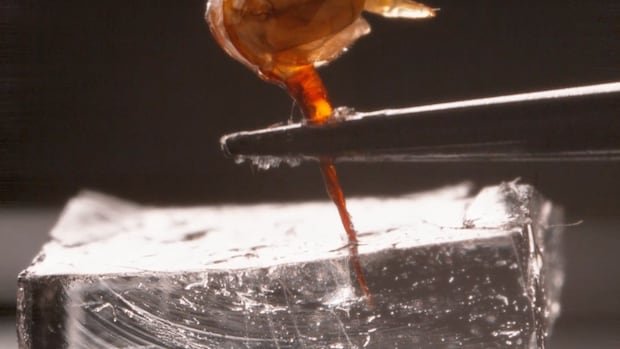
A western honey bee’s stinger is a last-ditch defense mechanism that injects venom into flesh, usually leading to the bee’s demise. Recent research in the Proceedings of the National Academy of Sciences sheds light on the effectiveness of this strategy. Thanks to modern cameras, lead author Fiorella Ramirez Esquivel, a postdoctoral researcher at Macquarie University in Australia, was able to capture the bee stingers in action for the first time.
The study utilized high-speed cameras to observe bee stings, revealing intricate details of the venom sac and stinger structures. By swiftly extracting the stinger from live honey bees and inserting it into an artificial skin substitute, researchers were able to study the mechanics of the stinging process within a tight timeframe.
The research unveiled a unique “double piston design” in the bee stinger, where specialized valves work in tandem to drive the stinger deeper and continuously deliver venom. This complex system, compared to a standard car engine, involves intricate movements that were recreated using 3D printing.
According to Juliana Rangel, a professor at Texas A&M University specializing in apiculture, the study provided new insights beyond traditional microscopic images, highlighting the prolonged venom pumping ability of honey bee stingers. The defense mechanism, involving autotomy where part of the body is left behind, serves as an insurance policy for the colony’s protection.
Unlike other bee species, female worker honey bees have barbed stingers that can embed in an attacker, sacrificing their lives for the greater good of the colony. Additionally, honey bee stingers release pheromones to attract other bees for defense. The study suggests that the stinging mechanism is not foolproof against all threats, but the barbs and continuous penetration enhance its efficacy.
Western honey bees, though originally from Europe, have spread globally and have been studied for centuries. The relationship with these bees dates back thousands of years, with early evidence of human interaction found in ancient cave paintings. By utilizing innovative videography techniques, researchers aim to uncover further insights into the honey bee’s complex stinging system for potential medical applications.
The study prompts questions about other honey-producing bee species and their lack of stingers, raising intriguing inquiries into their evolutionary adaptations and survival strategies.