
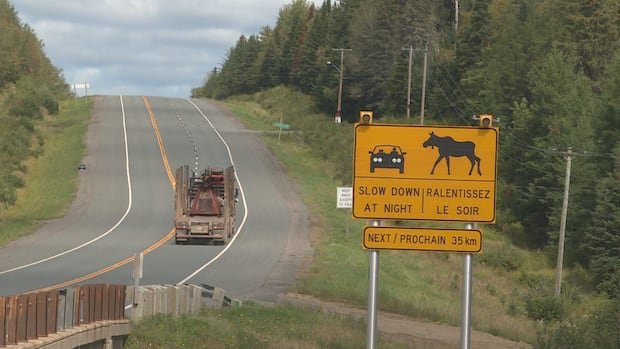
On a late August Saturday night, the Chaleur Lightning hockey team finished an exhibition game against the Miramichi Timberwolves and boarded their bus back to Bathurst. Assistant coach Alex Ouellet recalled a sudden collision with a moose on the highway just minutes into the journey, causing a loud bang. Fortunately, everyone on the team bus escaped unharmed, except for the driver who sustained minor scratches.
The encounter left a lasting impression on Ouellet and the team, a common sentiment among New Brunswickers who have faced similar incidents with wildlife. The following week, the province announced the installation of two new wildlife crossings in the same area as the accident occurred.
To prevent such collisions, New Brunswick utilizes wildlife fencing and crossings strategically placed based on collision data. Transportation Minister Chuck Chiasson explained that while extensive fencing is impractical, the province aims to create non-intrusive pathways for animals to safely traverse their territories.
Presently, the province boasts 82 wildlife crossings, including newly installed tunnels on Route 8 between Miramichi and Bathurst. These tunnels, over four meters tall and wide, consist of prefabricated concrete segments. Wildlife ecologist Graham Forbes emphasized the importance of making the tunnels intuitive for animals to use effectively.
Forbes noted that various creatures, not just large mammals, utilize the tunnels, showcasing their broad ecological impact. Despite the presence of these mitigation measures, the Department of Transportation has not observed a significant decrease in collisions. Chiasson highlighted ongoing efforts to enhance safety, including brush clearing and improved guidelines.
Looking ahead, Ouellet expressed hope for increased fencing in the area but acknowledged the challenges of preventing every crash. While recognizing the limitations, he emphasized the importance of proactive measures to mitigate risks on the highways.