
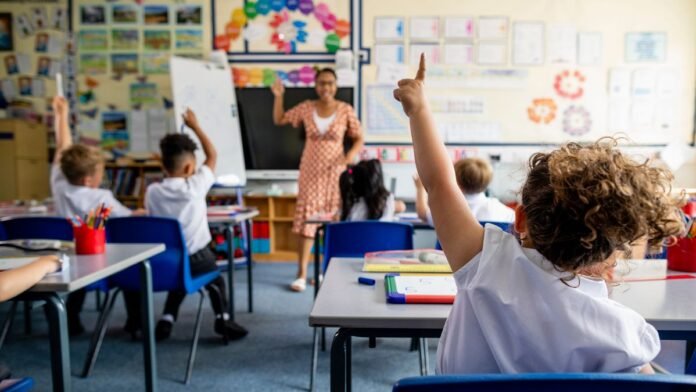
Schools are going to have specific minimum attendance goals in place as part of a strategy to make up for the learning lost during the pandemic. Education Secretary Bridget Phillipson is set to introduce a plan for each school to enhance efforts in helping students return to their classrooms.
Approximately a third of schools are still struggling to enhance their attendance rates. Starting this month, AI-driven minimum attendance improvement targets will be assigned to every school to ensure students are present and prepared for academic success.
The attendance baseline improvement expectation (ABIE) will be tailored to each school’s situation, considering factors like location, student requirements, and socio-economic status. Schools will be compared against institutions with similar demographics to monitor progress. These targets will not be accessible to Ofsted or made public, but will be used to identify areas needing support through Regional Improvement for Standards and Excellence (RISE) teams.
Although 36 new Attendance and Behaviour Hubs are being launched to offer personalized assistance to students, teaching unions have expressed reservations about additional targets adding pressure to struggling schools.
Bridget Phillipson emphasized the importance of children being in school to achieve and succeed, aiming to surpass pre-pandemic attendance levels. Collaborating with schools to establish individual targets is seen as a way to address attendance disparities and ensure all students receive the necessary support for school attendance and learning.
Before the pandemic, the overall absence rate was 4.7%, rising to 7.6% in the most recent academic year. The count of persistently absent students, those missing more than 10% of school days, nearly doubled since the pandemic outbreak.
Labour has made progress in boosting attendance, resulting in millions more school days and a decrease in persistently absent pupils. However, the goal is to return to pre-pandemic attendance levels.
School leaders’ union NAHT emphasized that schools are already working diligently to enhance attendance and questioned the effectiveness of additional targets. They suggested that the government should focus on providing practical resources and support rather than setting more targets.
Similarly, the Association of School and College Leaders stressed the need for a deeper understanding of school realities, proposing that the government ensure schools have access to dedicated attendance officers to address attendance barriers and support families effectively.
In conclusion, the initiative to set individual attendance targets for schools aims to address attendance challenges post-pandemic, although concerns have been raised about the added pressure on schools without addressing underlying issues affecting attendance.