
Cases of a Victorian superbug are on the rise as medical professionals observe escalating levels of a concerning drug-resistant strain. Data released by the UK Health Security Agency (UKHSA) reveals a total of 5,490 notifications of tuberculosis (TB) in England in 2024.
This marks a 13% surge, equating to more than 600 additional cases compared to the 4,831 notifications in 2023, which itself saw an 11% increase from the previous year. The percentage of drug-resistant TB cases has reached its peak since intensified monitoring commenced in 2012, with 2.2% of all confirmed cases exhibiting resistance to multiple medications.
The UKHSA has cautioned that without a reversal in the upward trend of cases, the UK could forfeit its “low-incidence” classification for TB, a status it has maintained since 2017. According to the World Health Organization (WHO), countries with less than 10 TB cases per 100,000 individuals fall under the low-incidence category.
England’s notification rate now stands at 9.4 per 100,000 people, slightly below the low-incidence threshold but up from 8.5 in 2023. Nevertheless, this figure remains notably lower than the peak rate of 15.6 per 100,000 witnessed in 2011.
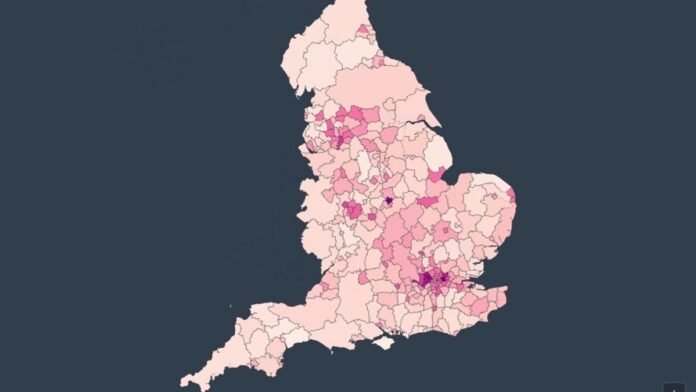
Certain regions within the country report significantly higher rates of TB. Over the three-year period leading up to 2024, Leicester recorded an average of 161 TB notifications annually, translating to a rate of 42.1 notifications per 100,000 people, the highest in England and more than four times the WHO’s low incidence threshold.
TB notifications are mandatory for general practitioners to report suspected or confirmed cases to the National Tuberculosis Surveillance System.
Moreover, one additional local authority district, Newham in London, registered a rate exceeding 40 TB notifications per 100,000 residents (41.4), while four others reported rates above 30: Brent (39.1), Harrow (35.0), Ealing (33.6), Slough (32.8), and Hounslow (31.5).
Sixty-one local authority areas surpassed the WHO low incidence threshold for TB notifications. Historically known as “consumption,” TB caused an estimated four million deaths between 1851 and 1910 in England and Wales, prevalent during the 18th and 19th centuries and frequently referenced in literature by authors such as Charles Dickens, Elizabeth Gaskell, and Samuel Richardson.
Globally, TB claimed an estimated 1.25 million lives in 2023, ranking as the primary infectious disease killer worldwide, surpassing even COVID-19. While final figures for 2024 are pending, a similar death toll from TB is anticipated.
In England last year, 82% of TB notifications pertained to individuals born outside the UK, although there was an uptick in cases among both UK-born and non-UK-born populations. TB remains linked to poverty, with higher prevalence in large urban areas.
For UK-born individuals, TB is more prevalent among those experiencing homelessness, substance dependency, and interactions with the criminal justice system.
Dr. Esther Robinson, Head of the TB Unit at UKHSA, emphasized the importance of swift action to break transmission chains through prompt identification and treatment. She advised seeking medical attention for persistent coughs lasting over three weeks, especially if accompanied by mucus, fever, or weight loss, as these could be indicative of TB. It is crucial to consult a GP if there is a suspicion of exposure, particularly after relocating from a region where TB is widespread.
TB, a treatable but severe chronic condition, primarily affects the lungs but may spread to other body parts such as glands, bones, and the brain. Symptoms include a persistent cough, fever, chills, appetite loss, weight loss, fatigue, and coughing up blood.
Individuals experiencing a prolonged cough, unexplained fatigue, persistent high temperature, night sweats, unexplained weight loss, or significant exposure to someone with TB should promptly seek medical advice. Urgent GP appointments should be arranged, and assistance from NHS 111 sought if coughing up blood occurs.
The article contains a detailed list of areas within England reporting high TB notification rates, emphasizing the significance of early detection and treatment in combating the spread of this infectious disease.