
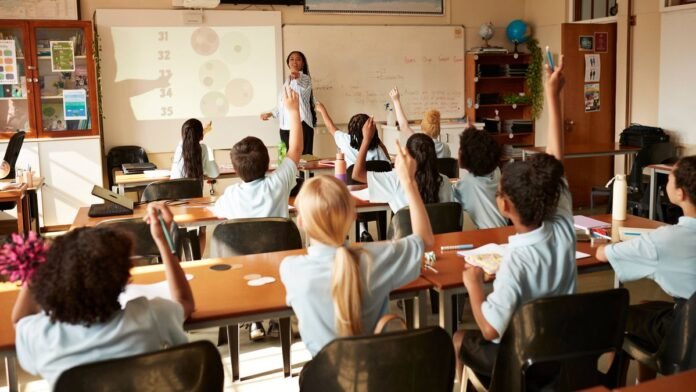
The government has unveiled the largest revisions to the school curriculum in more than ten years. Education Secretary Bridget Phillipson has announced a comprehensive overhaul of the school curriculum to equip children for a rapidly evolving world. Among the changes, students will be taught how to navigate online “dark forces” and identify fake news through media literacy. Additionally, a revamped computing qualification will enhance students’ technological skills for the future.
Furthermore, there will be a renewed focus on art education to ensure equal access for all students, not just a select few. These changes follow the Curriculum and Assessment Review by Professor Becky Francis, with full implementation scheduled for September 2028.
Primary school students will receive education on recognizing fake news and financial literacy, empowering them to make informed decisions about money management. Citizenship lessons will become mandatory in primary schools, covering topics such as financial and media literacy, climate change, democracy, and law.
The government also plans to diversify the history curriculum by incorporating British Black and Asian history and local history studies. Additionally, students will have access to a core enrichment offer, providing activities related to civic engagement, arts, culture, nature, and sports.
In secondary schools, there will be a reduction in the time spent on GCSE exams, with a focus on offering triple science GCSEs as a standard option. However, challenges such as the shortage of physics teachers may impact the implementation of this plan.
Moreover, new qualifications called V-levels will be introduced to enhance vocational education opportunities for young people. The government aims to elevate standards in oracy, reading, and writing skills from early years through secondary education.
Overall, these curriculum changes aim to better prepare students for the evolving demands of the modern world and provide a more comprehensive educational experience.