
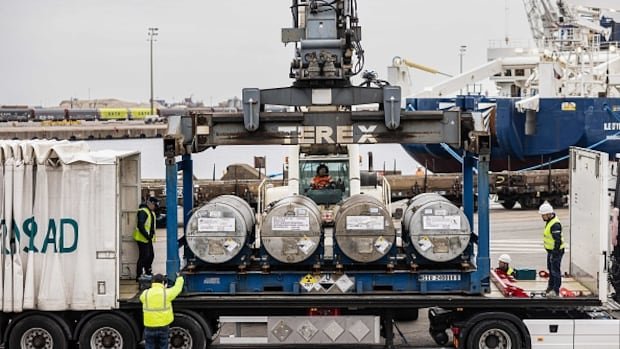
While the Ukrainian nuclear plant is under Russian control and facing attacks on its power infrastructure, Western countries like Europe and the United States continue to rely on Russian nuclear fuel for their power needs.
One of the recipients of low enriched uranium (LEU) from Russia is the Canadian-owned Westinghouse Electric, which uses this fuel for commercial nuclear reactors in the U.S. The U.S. had previously banned the import of Russian enriched uranium in August 2024 to reduce dependency on Russian sources. However, waivers were allowed under specific conditions until January 1, 2028.
In 2025 alone, the U.S. reportedly imported 400 tonnes of low enriched uranium from Russia, valued at around $1 billion US. Major recipients included subsidiaries of Framatome, Global Nuclear Fuel Americas, and Westinghouse.
Although the U.S. has taken steps to reduce reliance on Russian uranium, the European Union has not imposed a ban on Russian enriched uranium imports. Canada, while imposing sanctions on various entities and individuals, has not sanctioned doing business with Rosatom or Tenex.
Efforts are being made to reduce dependence on Russian uranium, but it remains a significant part of the global supply. Westinghouse, a key player in the U.S. nuclear industry, has been involved in various agreements to secure alternative sources of fuel, including from Saudi Arabia.
While Canada’s current reactors do not require enriched uranium, proposed new reactors may necessitate this fuel. The government has shown intent to support domestic production of enriched nuclear fuel.
It is essential for Western countries to reduce cooperation with Russian state nuclear entities, as every transaction with these entities may strengthen Russia’s position amid ongoing conflicts. Companies like Cameco and Westinghouse have shown support for Ukraine by engaging in agreements to supply nuclear fuel and build reactors, aiming to reduce dependence on Russian sources.