
The National Health Service (NHS) in the UK has issued a caution to individuals who depend on glasses or contact lenses, alerting them to the potential risk of two prevalent eye conditions that they may not be familiar with. Astigmatism, as described by health authorities, commonly leads to “blurry vision.”
This eye condition is typically managed with glasses or contact lenses, making individuals who use these more susceptible to experiencing the eye problem. However, there is also a likelihood that those affected may have another condition closely associated with astigmatism.
To increase awareness about this issue, the NHS detailed that having astigmatism means that one’s eye is shaped more like a rugby ball than a football. The primary symptoms of astigmatism include blurred vision, headaches, and eye strain, which may become noticeable after prolonged periods of focus, such as when using a computer.
The NHS further elaborated that this rugby-shaped eye causes light to focus at multiple points within the eye. While this condition may not always require treatment, healthcare professionals have identified several approaches that can be beneficial, including wearing glasses, using contact lenses, and even considering laser surgery.
Nevertheless, these options may not be suitable for everyone, and each comes with its own set of advantages and disadvantages, as reported by the Daily Record.
Astigmatism frequently coexists with nearsightedness or farsightedness. When it affects only one eye, it can sometimes result in a lazy eye, which develops when vision does not form correctly.
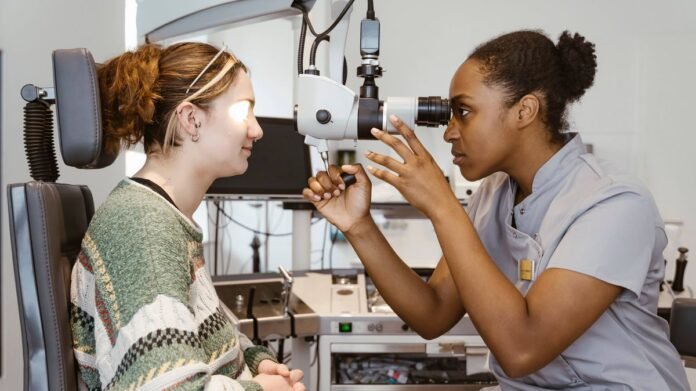
The NHS recommends that individuals experiencing symptoms of astigmatism or those who have not had an eye examination in the past two years should schedule an appointment with their optometrist.
The health service emphasizes that astigmatism can be associated with a condition called keratoconus, underscoring the importance of undergoing regular eye examinations.
According to Specsavers UK, “Keratoconus occurs when the cornea weakens and thins at its center, causing it to become irregular or conical in shape. This irregularity prevents the eye from focusing properly, leading to poor vision.”
Keratoconus often affects both eyes, with symptoms varying from person to person. During the initial stages, glasses or contact lenses may be recommended as a treatment option. However, if the condition worsens, a referral to a corneal specialist may be necessary for further treatment based on the severity of the condition.
You are eligible for a free NHS sight test if you meet specific criteria mentioned by the NHS. Additionally, individuals named on an NHS certificate for partial help with health costs may also receive assistance with the cost of a private sight test.
For more information on whether you qualify for a free NHS eye test and optical vouchers, visit the link provided.
This website and its partners use cookies and other identifiers to enhance user experience, analyze site usage, and display personalized advertisements. Users can opt out of data sale or sharing at any time by clicking the designated button on the webpage. By using the website and its services, users consent to the use of cookies and agree to the practices outlined in the Privacy Notice and Terms and Conditions.