
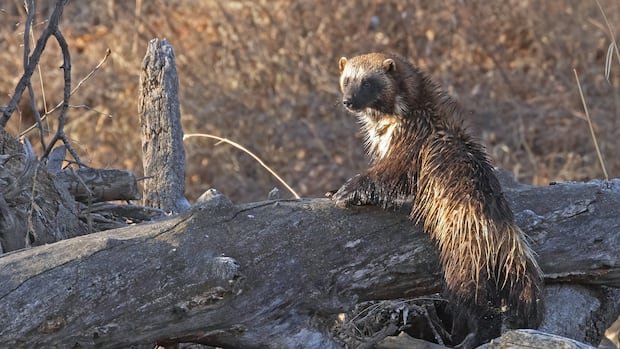
A recent study reveals that the presence of skiers, snowshoers, and snowmobilers in the backcountry has a more significant impact on wolverines than previously thought. Conducted across the Columbia and Rocky Mountain ranges, including Banff National Park, the research shows that areas with higher recreational activities and road networks have fewer wolverines inhabiting them.
While it was already known that wolverines tend to avoid human contact, the study indicates that the effects extend beyond mere avoidance of individuals on trails. Lead researcher Mirjam Barrueto from the University of Calgary, in collaboration with Parks Canada, studied wolverine populations across an 80,000 square kilometer area known for being favorable habitat for these animals.
Contrary to expectations based on previous studies, the research findings suggest that the region can support only around 300 wolverines, significantly lower than the estimated 500 to 600. Notably, winter recreational activities were found to have a more pronounced impact compared to summer activities due to the increased accessibility of the backcountry during snowy conditions.
Female wolverines, especially vulnerable while raising their young in winter dens, are particularly affected by disturbances caused by human activities. As a solution, Barrueto suggests identifying sensitive winter habitats and restricting access to these areas temporarily to safeguard the wolverine population.
The study also highlighted a decline in female wolverine numbers with an increase in road density, while male numbers remained unaffected. Jason Fisher, a wildlife ecologist from the University of Victoria, emphasized the importance of preserving undisturbed habitats like the Rocky Mountains and national parks to support wolverine populations effectively.
The research underscores that even minimal human activity, rather than the sheer number of individuals, can impact wolverine populations. Barrueto advocates for keeping recreation confined to established trails to minimize disturbances to the animals. Apart from habitat protection, efforts to mitigate wolverine fatalities from trapping, hunting, and vehicle collisions are deemed crucial by experts to ensure the species’ long-term survival.
Fisher emphasized the urgency of conservation actions, stressing the need for immediate decisions to safeguard wolverines, which have persisted in the mountains for millennia. He expressed a desire for these remarkable creatures to continue thriving in their natural habitats for years to come.