
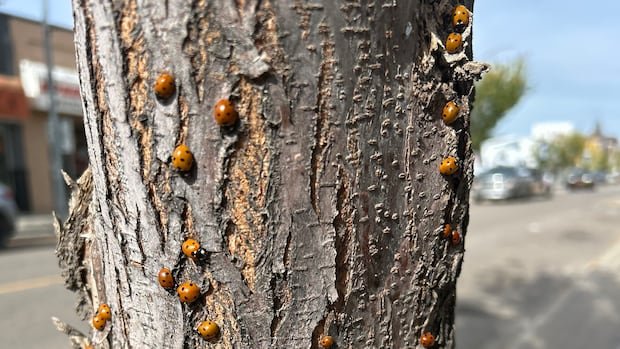
Ladybugs are highly active in Saskatchewan this month as they prepare for hibernation, experts report. Georgiana Antochi-Crihan, the City of Saskatoon’s entomologist, explained that ladybug populations fluctuate based on food availability, particularly their diet of aphids, scale insects, and mealybugs.
Although Regina has not experienced a significant increase in ladybugs this year, Ashley Thompson, the manager of parks technical services for the City of Regina, noted a surge in aphids, which support the survival of ladybugs.
Vesna Fa in North Battleford also observed a rise in aphids this past summer, attracting ladybugs to the area. Fa, the executive director of Midwest Food Resources, emphasized the importance of preserving ladybugs as beneficial allies in the ecosystem.
Celebrating the diversity of ladybug species in the province, Candace Savage of Wild About Saskatoon highlighted the significance of providing habitats for both native and introduced ladybug species. The seven-spotted lady beetle, a common introduced species recognizable by its seven spots, plays a vital role in the environment.
As ladybugs gather for hibernation, Thompson mentioned that they congregate in warm spots around buildings in Regina. Antochi-Crihan revealed that ladybugs produce antifreezing compounds to survive the harsh prairie winter, indicating a potential resurgence in their numbers come spring.
Overall, ladybugs play a crucial role in the environment and should be valued for their contributions to biodiversity.