
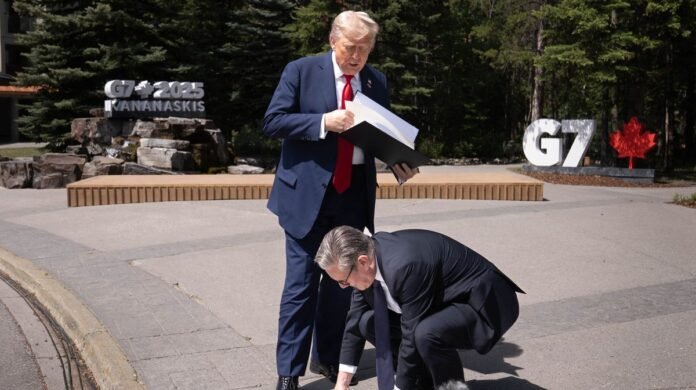
In an unexpected turn of events during his second term, President Donald Trump’s surprising affinity for UK Prime Minister Keir Starmer has raised eyebrows. Starmer has revealed that they share a bond over common “family values,” leading to speculation that Starmer might possess a unique ability to influence Trump’s decisions among European leaders.
A recent incident involving NATO and Denmark seeking Starmer’s assistance to ease Trump’s concerns about Greenland highlighted the Prime Minister’s role as a mediator. Starmer relayed messages from NATO’s Mark Rutte and Danish Prime Minister Mette Frederiksen to Trump, showcasing his diplomatic skills. Notably, Ukrainian President Volodymyr Zelensky also values Starmer’s influence on Trump’s decision-making process.
However, as with any relationship, there are ups and downs. The dynamic between Starmer and Trump faced challenges, hinting at underlying tensions that could potentially lead to legal intervention.
The initial high-stakes meeting between Keir Starmer and Donald Trump in the Oval Office portrayed a tense atmosphere, later diffused by Starmer’s offer of a second state visit from King Charles, which pleased Trump and set a positive tone for their interactions. Despite initial success in negotiations and security assurances for Ukraine, Trump’s behavior towards Zelensky on TV the following day underscored the transient nature of their rapport.
Subsequently, Trump’s offer of a trade deal to Starmer, despite some limitations, further strengthened their bond. However, expectations for expanded trade agreements faded, with steel exports still facing significant tariffs. A Tech Prosperity Deal signed during Trump’s state visit was short-lived, as the US suspended it due to perceived trade barriers.
Starmer’s impact on Trump’s foreign policy decisions regarding Russia and Ukraine remains unclear, as Trump oscillates between various influences. Trump’s unilateral actions, such as the invasion of Venezuela without consulting Starmer, hint at the complexities of their relationship.
Moreover, Trump’s controversial interest in Greenland signals potential strains in Starmer’s influence over him. Despite Starmer’s attempts to convey diplomatic messages, Trump’s aggressive stance on Greenland’s future challenges their alignment.
In light of escalating tensions and unpredictable actions by Trump, questions arise about the depth and significance of the relationship between Starmer and the US President. Amidst diplomatic exchanges and ceremonial gestures, the true extent of the benefits derived from their association remains uncertain, prompting reflections on the nature of their “Special” relationship.