
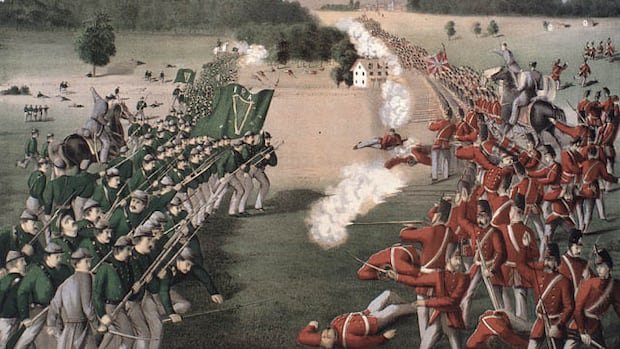
An overlooked clash on Canadian land just a year before Confederation may not resonate widely with Canadians beyond Fort Erie, Ontario, but it holds significance in various aspects of history. The 1866 Battle of Ridgeway, also known as Limestone Ridge, marked the first instance of Canadian troops under Canadian leadership engaging in combat. This event also inspired Decoration Day, a precursor to Remembrance Day observed in parts of Canada each year.
Despite its historical importance, the nine individuals who lost their lives in the battle are not included in the Books of Remembrance on Parliament Hill, a collection commemorating fallen soldiers serving Canada. A new petition, spearheaded by Conservative MP Fred Davies, aims to have these nine men and the numerous others who perished post-battle added to the official list.
Reflecting on the battlefield that resides in his riding, Davies emphasized the need for national recognition for the fallen soldiers. The Battle of Ridgeway unfolded as inexperienced Canadian volunteers confronted Fenian raiders, largely comprised of American Civil War veterans, along Limestone Ridge near Ridgeway and Fort Erie. The Fenian Brotherhood, an Irish American movement seeking Irish independence, attempted to capture parts of British North America.
Historian Peter Vronsky highlighted the swift mobilization of Canadian volunteers but noted their lack of preparation for what he deemed Canada’s inaugural modern battle. Despite facing challenges like insufficient supplies and inadequate gear, the Canadians engaged the invaders in combat, ultimately forcing the Fenians to retreat back across the Niagara River.
While Ridgeway was not a definitive victory for Canada, it symbolized a turning point in the campaign against the Fenians. Davies stressed that recognizing the sacrifice of those who perished is crucial, regardless of the battlefield outcome. In 2016, a memorial honoring the fallen soldiers was unveiled in Fort Erie, underscoring the town’s persistent efforts to have their names acknowledged in the national Books of Remembrance.
Although the battle predates the formal establishment of Canada, the inclusion of soldiers who died before Confederation in the Books of Remembrance sets a precedent. Redekop, Davies, and Vronsky all suggested that the Battle of Ridgeway played a pivotal role in shaping Confederation.
Vronsky contended that the battle solidified the sense of Canadian identity and allegiance among the troops, such as Alexander Muir, who fought with the Queen’s Own Rifles and later penned “The Maple Leaf Forever.” This patriotic composition, inspired by the maple leaf emblem of the Queen’s Own Rifles, embodies the shift towards Canadians defending their homeland and symbolizes a significant moment in Canada’s evolving history.