
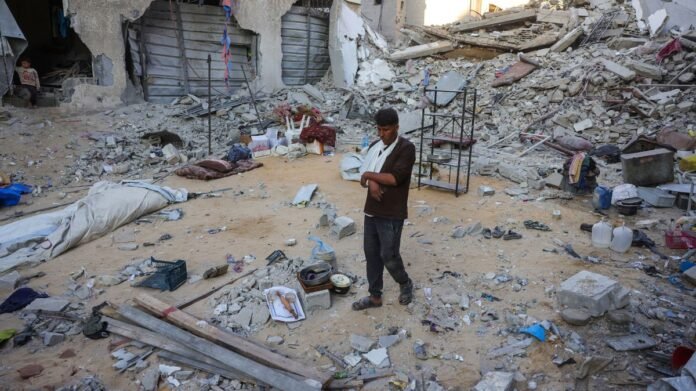
Israel’s military has announced the reinstatement of the Gaza ceasefire following intense overnight airstrikes that resulted in the deaths of at least 104 Palestinians, including nearly half who were children.
Concerns have been raised as 46 children were among those killed in the attacks, which were triggered by militants firing at Israeli soldiers, leading to the death of a soldier who also held US citizenship.
The abrupt breach of the ceasefire on October 10 posed a significant threat to the fragile peace that had settled over the Gaza Strip. Israeli Prime Minister Benjamin Netanyahu took action after accusing Hamas of violating the ceasefire by releasing body parts believed to be from a previously held hostage.
The situation escalated with the fatal shooting of an Israeli soldier during a confrontation in Rafah, the southernmost city in Gaza.
This recent episode highlights the delicate nature of the Gaza ceasefire, with over 100 Palestinians losing their lives in retaliation for the killing of an Israeli soldier within the Strip.
Hamas, capable of provoking a strong Israeli response, is facing diminishing bargaining power after releasing the remaining hostages to Israel. Despite denying involvement in the sniper incident, Hamas faces accusations of including remains of a previously released hostage in the body-release agreement.
The group’s actions aimed at straining relations between Israel and the US have not gone as planned, with US President Trump supporting Israel’s response. Netanyahu’s decisive actions in ordering the airstrikes have solidified his control over the Gaza peace process, allowing him to respond forcefully to any ceasefire violations by Hamas.
Though criticized for the brutality of the response, Netanyahu’s approach has been strategic in dealing with Hamas. The ongoing challenge remains as to what level of Israeli response will truly end the cycle of violence and maintain the ceasefire.
The repercussions of the recent events raise questions about the definition of a disproportionate reaction and how the ceasefire’s stability will be tested in the future.
This development puts the spotlight on the complexity of the ceasefire dynamics in the region, emphasizing the high cost paid by Palestinian civilians and the ongoing struggle to sustain peace amidst escalating tensions.
As the situation unfolds, the responses from the US and Hamas will continue to shape the future course of the ceasefire agreement.