
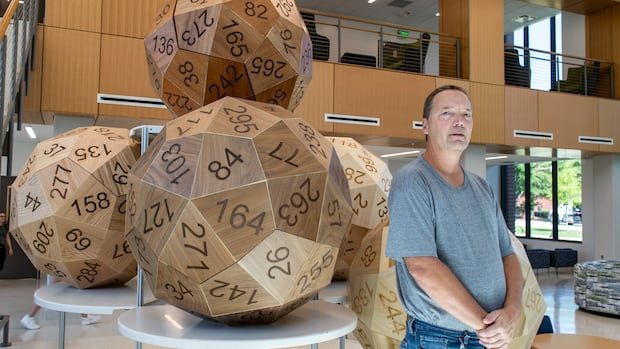
In 2012, Eric Harshbarger, a mathematician and senior lecturer at Auburn University, was challenged by a board game designer to create dice that could determine the starting player without any chance of a tie. The aim was to streamline the initial turn and expedite the game setup process.
Harshbarger, intrigued by the problem, embarked on the task to develop a set of dice that would ensure a clear winner from a single roll. Although he initially envisioned a solution theoretically, practical implementation proved to be a significant hurdle.
After nearly 15 years of collaborative efforts with computer scientists and mathematicians worldwide, Harshbarger and his team successfully crafted a set of specialized dice known as the Go First Dice for five players. These dice guarantee a fair method to decide the first player in a board game, eliminating the possibility of ties.
The journey to devise these unique dice involved numerous iterations and challenges. While smaller sets of dice for fewer players were relatively easier to create, designing a set for five players presented a complex puzzle. Through persistent experimentation and theoretical exploration, the team eventually settled on a set of five 120-sided dice, thanks to a breakthrough by a researcher in Australia.
Canadian software engineer Paul Meyer later contributed to the project, proposing a solution using five 60-sided dice. His innovative approach, utilizing mathematical patterns and computational methods, led to a viable design. The resulting golf-ball-sized dice are now commercially available, designed to offer fair outcomes based on solid mathematical principles.
The research continues as Harshbarger and his colleagues explore the possibility of using fewer sides for a five-player set and potentially expanding the concept to accommodate six players. Despite the challenges ahead, they remain open to unexpected breakthroughs and new theories that could further enhance their dice design.
The quest to solve this seemingly trivial yet mathematically intriguing problem underscores the dedication and perseverance of mathematicians like Harshbarger, who find beauty and satisfaction in unraveling complex puzzles that defy conventional solutions.