

On a Tuesday afternoon at Calgary’s Confederation Park, Stephen Carter outlines his expectations for Alberta’s upcoming referendum on separation: he hopes for an 80/20 majority in favor of remaining part of Canada.
“If the result is close, we’ll have to face this issue indefinitely,” Carter remarks regarding the question of Alberta’s independence.
“That would be the worst outcome.”
At the park, Carter distributes lawn signs stating “Stay in Canada.” However, he insists that individuals cannot simply take one piece of campaign material.
“They are required to take two signs, some brochures, and buttons as well, because each item can spark a conversation,” Carter explains.
Carter, an experienced and vocal political strategist, has collaborated with various Alberta politicians, including Naheed Nenshi, Alison Redford, and Danielle Smith.
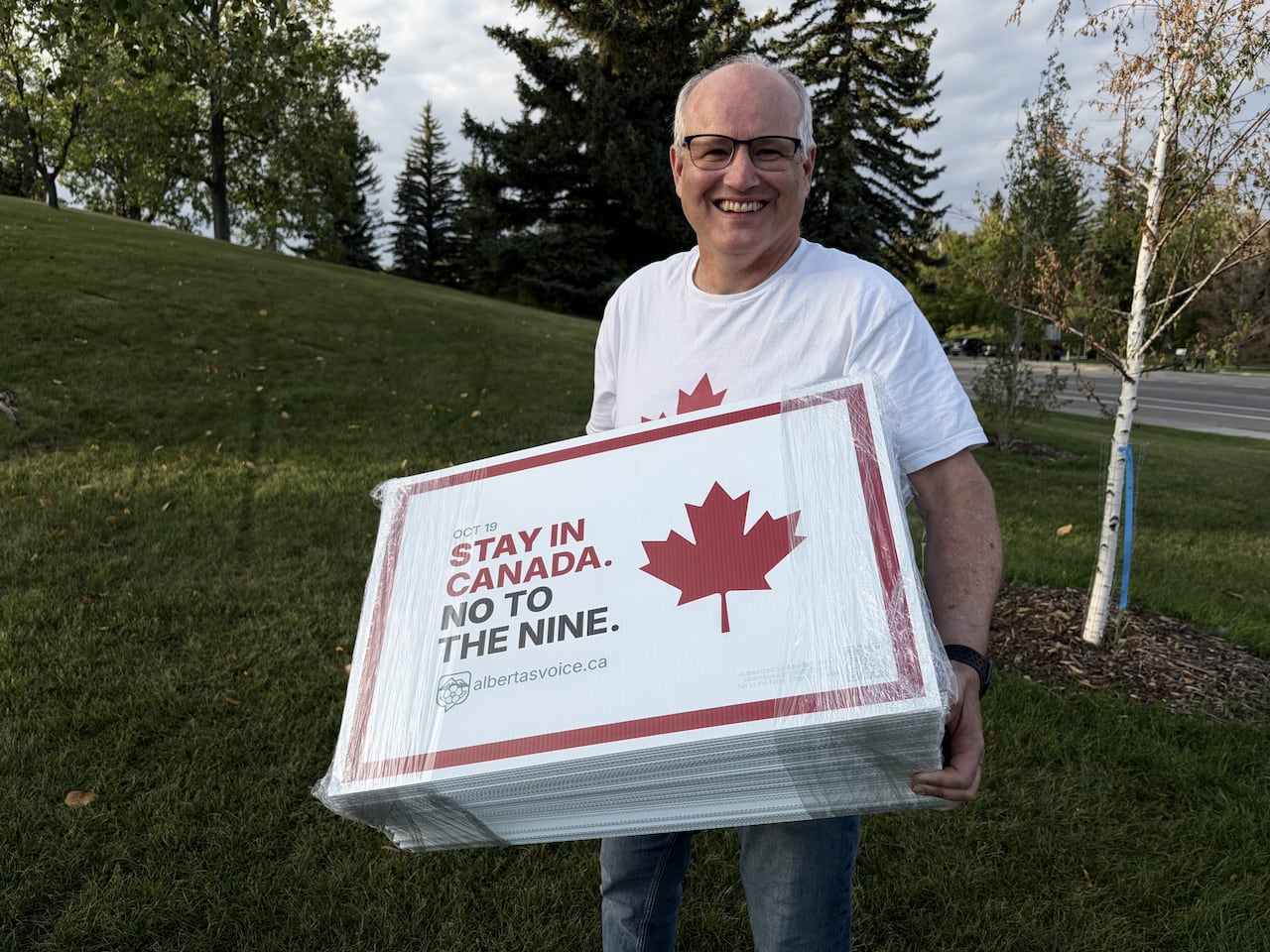
Stephen Carter, affiliated with a group called Alberta’s Voice, expresses concern that voters might be disheartened by the consistently low support for separation and choose to abstain from voting. (Jennifer Chevalier/CBC)
Yet this campaign presents new challenges, and he is apprehensive.
“[Albertans] believe we will win overwhelmingly,” Carter clarifies. “So why would they invest time in voting, especially when that time involves answering nine questions they have no familiarity with?”
Indeed, surveys have repeatedly indicated that a significant majority of Albertans intend to vote to remain in Canada, while approximately 22 to 27 percent would support the provincial government initiating the legal process for a second, binding referendum on secession.
However, this creates a concerning dilemma for Carter and other federalist campaigns around the province: their backers might opt to stay home, convinced that the result is a foregone conclusion. Furthermore, they face a group of motivated separatists who are eager to invest their time and resources into their cause, hoping for a low turnout among federalist voters.
-
Two sides in Alberta separation debate entrenched, with majority wanting to remain in Canada: poll
-
Alberta independence group releases its ‘transition plan’ to become a country
John Ellard, a social psychologist who visited Carter’s tent, shared his concerns.
“I fear we might witness a repeat of Brexit, where many individuals think, ‘No, the polls indicate we will stay in Canada,'” Ellard expressed.
Carter noted that part of his challenge is the lack of data to identify where and whom to target his outreach efforts.
“Typically, we build political engagement over time, election after election,” Carter stated. “[But this time] we lack a historical framework … we have no means to connect with the electorate.”
A report released Wednesday by the Calgary Chamber of Commerce claims Alberta’s separation from Canada could shrink the provincial economy by $62 billion a year. As CBC Calgary’s Joel Dryden reports, an Alberta independence advocate says the report plays on people’s fears instead of focusing on opportunity.
This absence of historical precedence also poses a challenge for Janet Brown, a prominent Alberta pollster and founder of Janet Brown Opinion Research.
Regardless of how often she surveys individuals about separation, the findings remain consistent: around 25 percent would support splitting from Canada, with a standard margin of error.
However, as Brown explained to CBC’s The House, an uneven turnout could disrupt everything.
“If we end up in a situation where all separatists vote, but only half of federalists do, then suddenly all this polling we’re conducting will be in jeopardy,” Brown warned.
Engaged and motivated separatists
Approximately 150 kilometers north, in Red Deer, Gerry Bennet sits at a table adorned with a blue Alberta flag on one side and a Canadian flag on the other. He eagerly awaits the arrival of Keith Wilson, leader of the independence group Let Alberta Decide.
Bennet, a separatist, expresses that he believes there is nothing that Prime Minister Mark Carney or the federal government could say to alter his perspective. As he reflects on the future for his children and grandchildren, he becomes emotional mid-interview.
“Taxes are incredibly high, and grocery prices are exorbitant. Just getting by is a daily struggle. This is a tough situation,” Bennet shared.
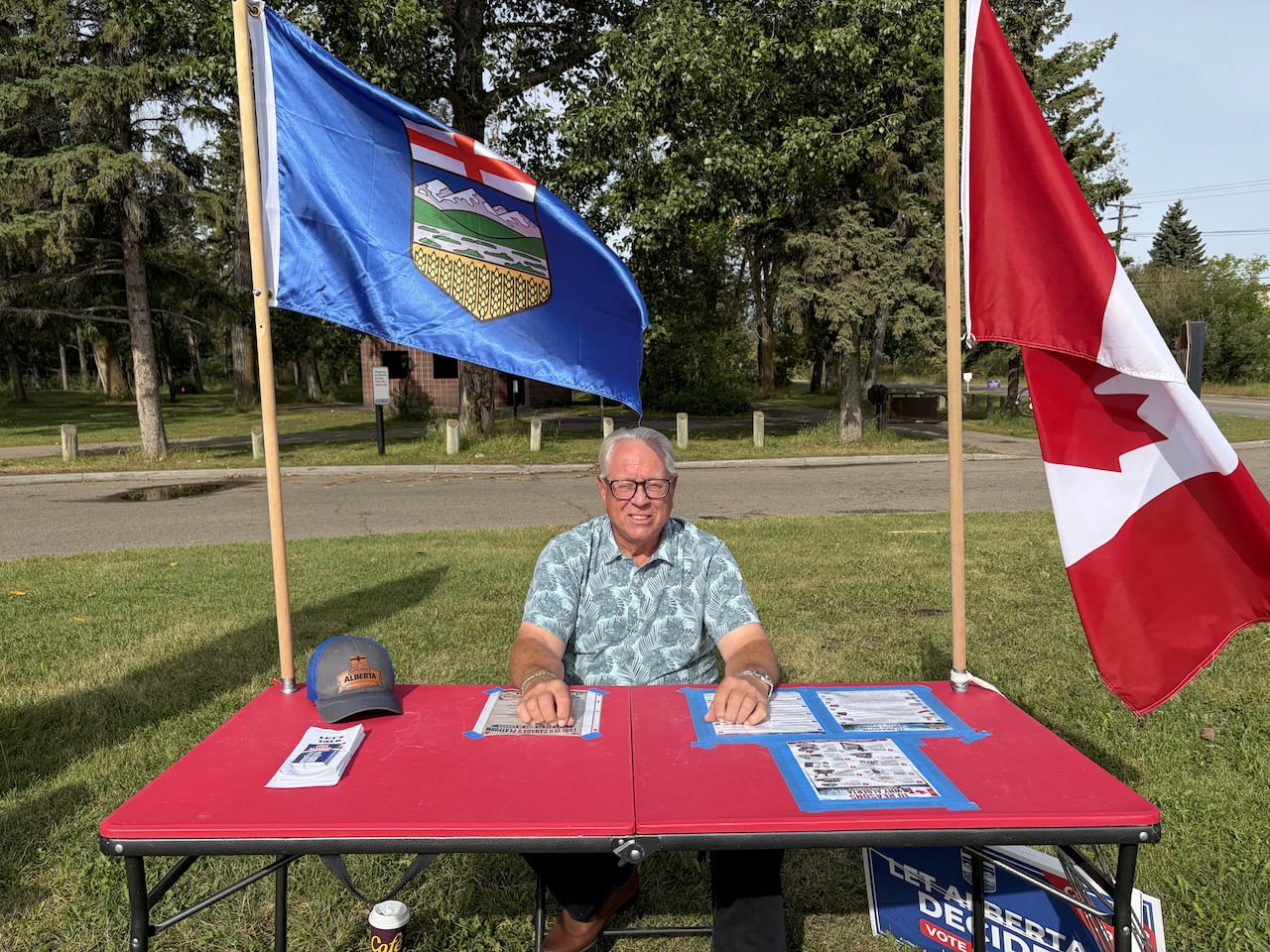
Gerry Bennet, a separatist from Red Deer, Alberta, urges undecided voters to support the idea of secession as a means to convey a message to the federal government. (Jennifer Chevalier/CBC)
Despite being a minority in Alberta, Bennet and his fellow separatists remain highly motivated. According to Elections Alberta data, third-party advertisers advocating for separation have raised about $925,000 to date.
In comparison, registered federalist organizations have gathered $277,000.
Bennet’s advice to undecided Albertans is to vote in favor of initiating a binding referendum process, as they still have the option to vote against separation later.
“Send a message to Ottawa, and let’s see how it unfolds from there,” Bennet suggested.
Carter contended that this is a risky bet that could result in an exodus of industries and businesses wary of the unpredictability, similar to the situation during the 1995 Quebec referendum. Several Alberta business leaders have expressed similar concerns recently.
“We don’t want to repeat that experience,” Carter emphasized. “If you believe we will become wealthier by separating, you’re mistaken.”
In an interview during his event with The House, Wilson dismissed worries about the economic implications, asserting that Alberta holds significant leverage over several provinces that would facilitate the “country” in solidifying its markets.
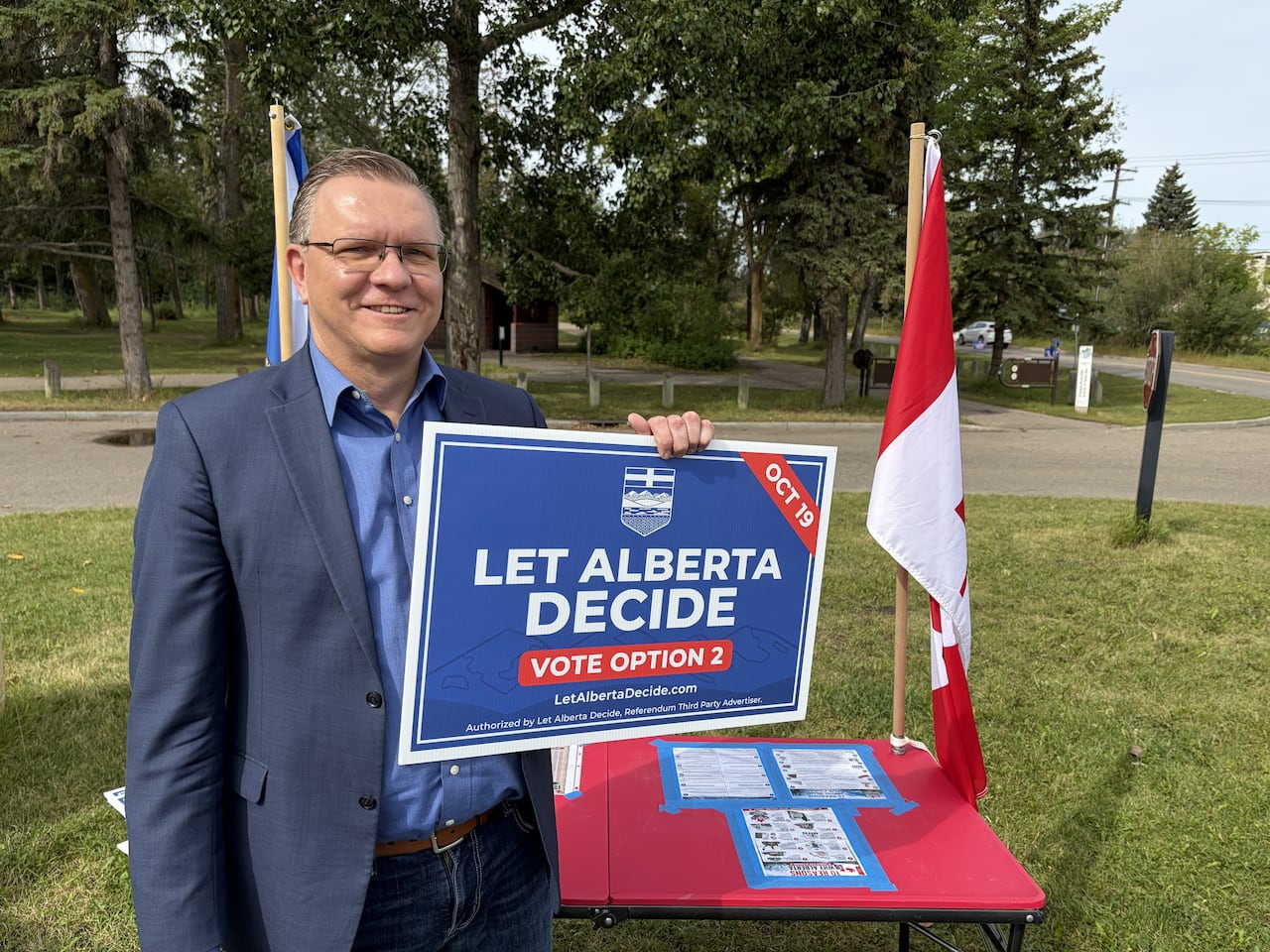
Keith Wilson, leader of the independence group Let Alberta Decide, expresses that he is not troubled by polls indicating low support for separatism, emphasizing that the final stages of the campaign are what truly matter. (Jennifer Chevalier/CBC)
‘We’re an energy superpower’
“A significant portion of British Columbia’s economy must be transported eastward to reach eastern markets, not only within Canada but also to places like Chicago,” he stated.
“We likely possess more [oil] refineries than all other provinces combined,” Wilson noted. “We are an energy superpower, and our products are sent to refineries in Ontario and even Quebec.”
When questioned about the polling showing consistently low support for separation, Wilson expressed indifference. He believes that the critical phase of any campaign is the final stretch, specifically the two weeks leading up to the vote on October 19.
“My joke is ‘Yeah, there’s no chance for us to win. You don’t even need to vote. Just stay home; you guys have this. Trust the polls, you got this,” Wilson said with a chuckle.
As the date for the vote approaches, Carter expresses his comfort with the prospect of an 80/20 vote split, acknowledging the longstanding separatist sentiment in his province.
However, that is as far as he is willing to go.
“I firmly believe we are better off as part of Canada, and the 80 percent of Albertans who share this view are the prevailing force,” Carter stated. “We should not be subjected to the whims of a vocal minority.”