
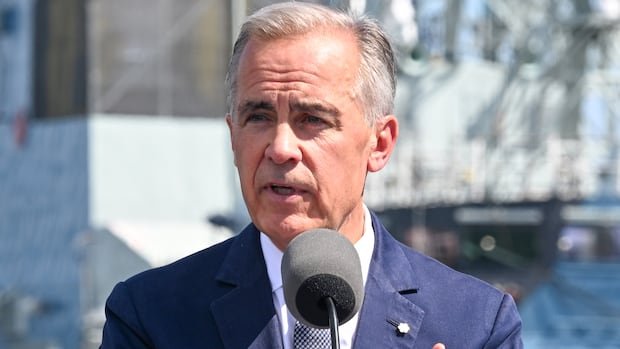
Prime Minister Mark Carney expressed his readiness to re-engage in negotiations with the Trump administration once the U.S. demonstrates genuine interest in fostering an equitable economic partnership with Canada, instead of treating it as an inferior entity. Carney emphasized the importance of approaching the negotiating table with mutual respect and fair treatment for both countries’ industries to enhance the existing trade agreement, known as CUSMA.
Following the U.S.’s introduction of last-minute unfair changes during negotiations, Canada decided to withdraw from the talks, citing concerns about restrictions on future trade deals and potential threats to French-language media subsidies and bilingual labeling requirements. Consequently, Canada faced substantial 50% tariffs on approximately $28 billion worth of exports to the U.S.
The proposed auto deal by the U.S., which included a drastic tariff increase on Canadian automobiles, car parts, and steel, was deemed unacceptable by Carney as it could have adversely impacted the industry over time. President Trump’s announcement of escalating tariffs to 50% on Canadian automotive products by January 1 was met with criticism from Carney, who viewed it as part of the U.S. administration’s broader strategy to undermine Canadian industries.
In response to Trump’s tariffs, Ontario Premier Doug Ford suggested imposing surcharges on electricity exports to the U.S., highlighting the need for collective action among provinces sending energy southward to protect domestic industries from unfair competition. Carney supported exploring alternative measures, including potential surcharges, but emphasized the importance of maintaining a positive approach amidst escalating trade tensions.
During an event in Lévis, Carney announced substantial funding for Quebec’s shipbuilding industry to construct new icebreakers for the Canadian Coast Guard, emphasizing the government’s commitment to supporting domestic manufacturing. While Carney outlined conditions for Canada’s return to negotiations, U.S. Vice-President JD Vance indicated ongoing talks and a desire for respectful dialogue.
Vance’s comments echoed Trump’s criticism of Canada’s trade policies, portraying Canada as unappreciative and dependent on U.S. protection. However, Carney reaffirmed Canada’s sovereignty and strategic importance in providing essential resources to the U.S., despite ongoing trade disputes. The focus remains on constructive engagement and exploring options to safeguard Canadian interests in the face of escalating trade tensions.