
Parts of British Columbia are experiencing significant drought this summer, leading to water use restrictions in areas like Bessette Creek to safeguard salmon populations from dwindling water levels. Temporary protection orders for the Salmon River watershed were also implemented due to escalating wildfire risks, later reinstated in response to ongoing challenges. Beyond these regions, other watersheds are grappling with severe conditions prompting governmental intervention.
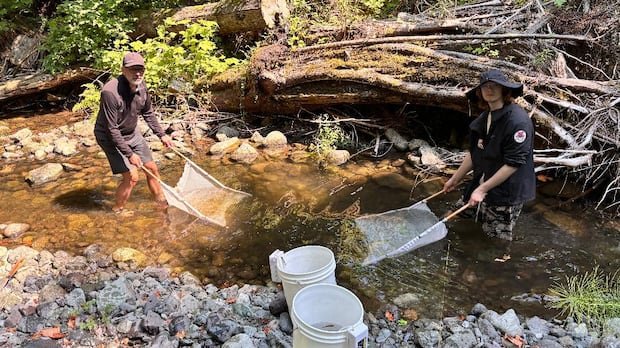
Bob Crandall, treasurer of the Cowichan Lake Salmonid Enhancement Society, oversees the care of 16 streams linked to Lake Cowichan, observing a consistent trend of increasing dryness annually. The society conducts “fry salvage,” a process involving the manual rescue and relocation of fish from depleting rivers to alternative water bodies. Crandall emphasizes the importance of human intervention in rectifying ecological imbalances caused by human activities, a responsibility he has upheld for over 16 years.
While local communities in British Columbia are supportive of these rescue efforts, scientists caution that such measures have limitations and may not offer sustainable solutions in the long term. Collaborating with the Ts’uubaa-asatx Nation and volunteers, Crandall focuses on relocating various fish species like salmon, trout, and char to more hospitable environments. However, the evolving climate poses challenges, with streams drying up further upstream, necessitating greater effort and resources for successful relocation.
The relocation process involves utilizing aerators, bubblers, and nets to ensure fish survival during transportation across arid streambeds. Crandall’s deep-rooted connection to fish, stemming from his upbringing in a trout hatchery, drives his commitment to preserving these species within the ecosystem. The Ts’uubaa-asatx Nation plays a pivotal role in these efforts, leveraging drone technology to identify drying streams and supporting the relocation process.
Amid escalating drought and extreme heat, similar rescue initiatives face constraints globally. In France, severe drought conditions have rendered fish relocations ineffective, with unprecedented weather events occurring at alarming frequencies. Such challenges underscore the urgency of prioritizing ecosystem restoration and sustainable water management over short-term interventions like fish rescue operations.