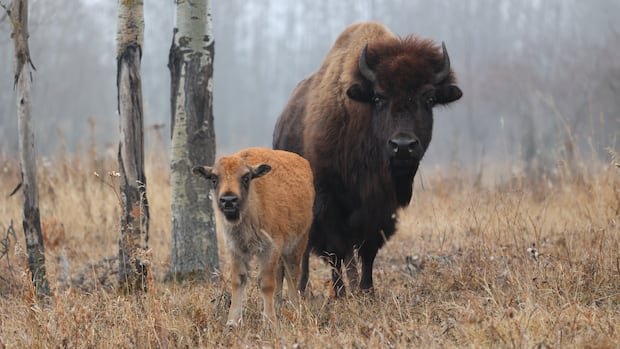
Once abundant across North America, bison faced near extinction due to hunting, leading to their transformation from vast herds to isolated populations. Recent DNA research has unveiled insights into this evolution, offering a genetic roadmap spanning 20,000 years.
The study, detailed in the journal Science, involved sequencing 160 bison genomes by a team of nearly 40 scientists, with a focus on Canadian contributors. Led by paleogeneticist Jonas Oppenheimer, the research was conducted at the Paleogenomics Lab at the University of California, Santa Cruz, renowned for studying ancient DNA from fossilized remains.
The objective is for these genetic revelations to inform conservation strategies, aiming to enhance the survival prospects of bison by understanding their complex genetic heritage.
Historically genetically connected, modern bison populations now face challenges due to fragmentation, impacting their resilience. Oppenheimer emphasized a significant shift in genetic diversity among contemporary bison herds compared to their ancestors, attributing this change to a severe bottleneck during the era of human-induced near-extinction.
Evolution Uncovered
By analyzing bison genomes from ancient bones and living herds, researchers traced the species’ biological diversity evolution over time. The DNA samples were collected from managed herds in Canada and the U.S., as well as from wild populations in both countries.
The study involved sequencing 115 ancient bison genomes and 45 modern ones, combined with existing data to create the most extensive genetic map of bison to date. Chris Jass from the Royal Alberta Museum underscored the study’s collaborative nature and its practical implications for modern herd management.
The consequences of the historical bison slaughter, triggered by intense hunting and government actions in the late 19th century, are still evident in the species’ genetic makeup. Despite surviving diversity, the genetic distinctiveness observed in contemporary herds reflects their isolated and fragmented existence.
Divergence and Conservation
Contrary to prior beliefs, the study highlighted the minimal presence of cattle ancestry in bison genomes. It also emphasized the significant divergence between wood bison and plains bison, each adapted to distinct habitats.
The research indicated a split between wood and plains bison around 3,000 years ago, driven by climate changes that led to habitat shifts. Human interventions, such as species intermixing, further influenced the genetic makeup of bison populations.

Established to serve the public interest, this publication delivers independent, verified, and responsible journalism. Our editors and correspondents adhere to strict ethical standards to ensure accuracy, fairness, and credibility in every report.
Contact Us
Al Mankhool Street, Bur Dubai, Dubai, United Arab Emirates
Email: news@thegulfmail.com
© All Rights Reserved by Gulf Mail