
A significant discovery of a nursery housing billions of young sea cucumbers beneath the waters near Sanikiluaq, Nunavut, is shedding light on the species and potentially paving the way for economic opportunities in the Arctic community.
Lucassie Arragutainaq, who heads the Sanikiluaq Hunters and Trappers Association, mentioned that his community regularly consumes small, young sea cucumbers. However, the larger adult sea cucumbers could be of interest to markets in China and Japan.
Exploring the potential integration of sea cucumbers into plans for a commercial scallop fishery, the association collaborated with scientists from Memorial University in Newfoundland to investigate Cucumaria frondosa, also known as the Orange-footed sea cucumber, in 2018.
Led by Annie Mercier, a professor at the university’s ocean sciences department, the research team, along with community residents, discovered the nursery the following year, to the surprise of the local community.

Lucassie Arragutainaq, the manager of the Sanikiluaq Hunters and Trappers Association, mentioned the community’s consumption of small sea cucumbers and the potential market for larger adults. (Liny Lamberink/CBC)
Mercier expressed excitement over the find, highlighting the lack of knowledge about nursery grounds for the many sea cucumber species worldwide due to their elusive nature.
In a 2023 publication in the journal Polar Science, Mercier and her team detailed the discovery of the first Cucumaria frondosa nursery near Sanikiluaq.
The tiny baby sea cucumbers, measuring less than two millimeters, were described as pink specks on rocks and mussel shells near the water’s surface, contrasting with the adult sea cucumbers found deeper underwater.
According to Mercier, the expansive nursery likely spans the entire Belcher Islands archipelago coastline, residing one to three meters below the ocean surface.
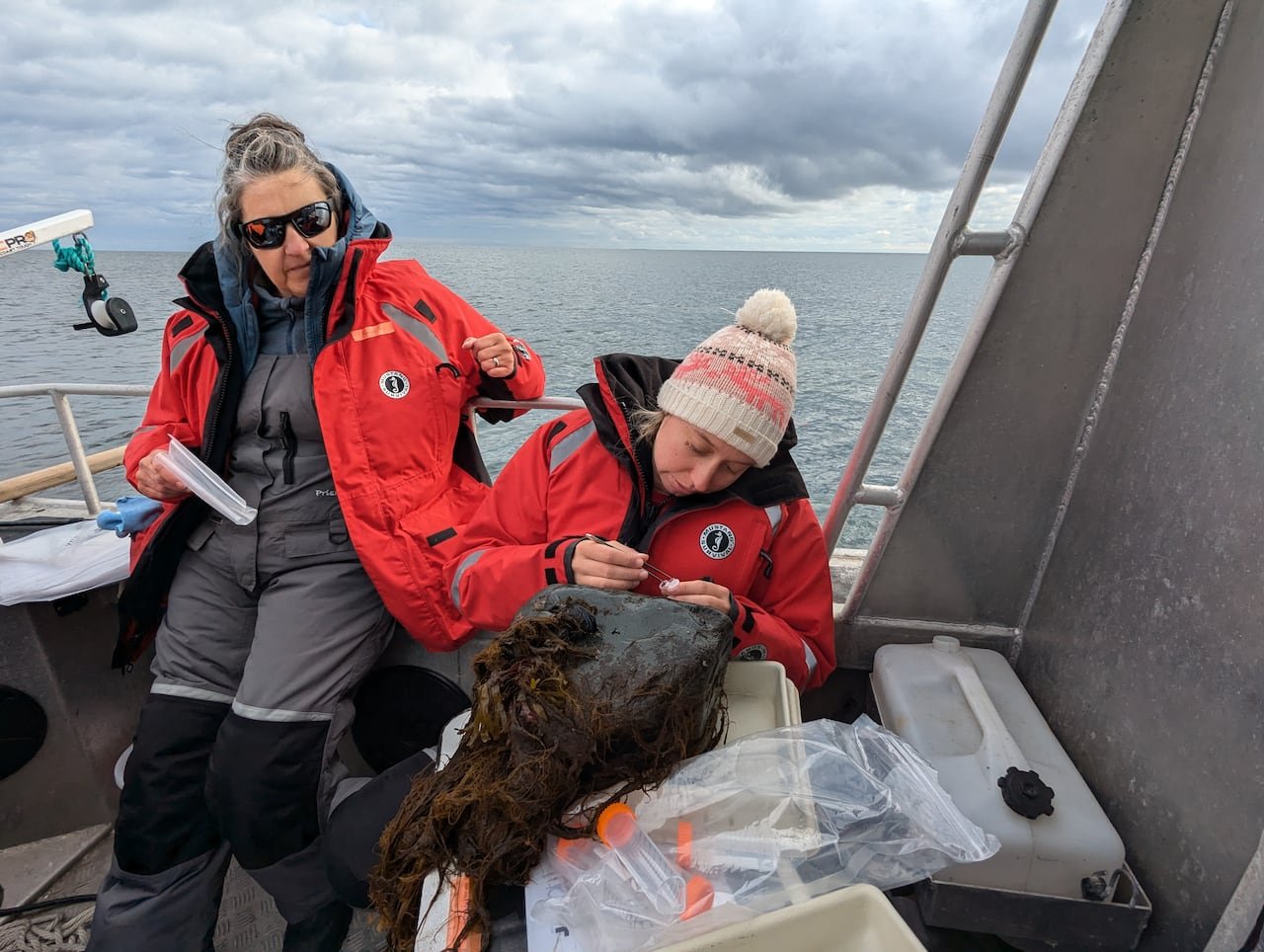
Annie Mercier and Joséphine Pierrat during a research trip to Sanikiluaq in 2024. (Submitted by Joséphine Pierrat)
Mercier emphasized the research opportunities unlocked by the nursery’s discovery, enabling investigations into growth rates, migration patterns, and behavioral shifts among the young sea cucumbers.
She stressed the importance of this information for species management.
‘They’re everywhere’
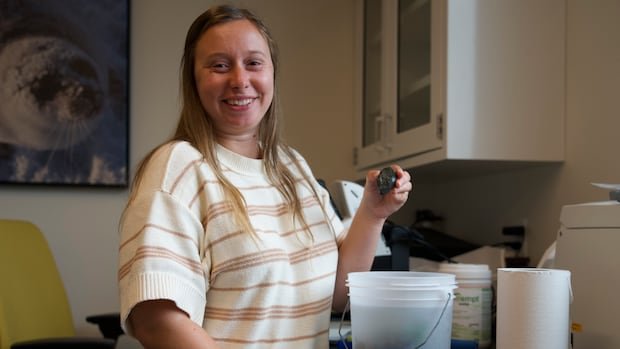
During a visit to Sanikiluaq, Joséphine Pierrat pointed out various sea cucumbers in a container filled with water, rocks, and mussels.
While a juvenile sea cucumber was easily identifiable, the younger specimens were more challenging to spot, as Pierrat, a postdoctoral researcher at Memorial’s ocean sciences department, indicated.