
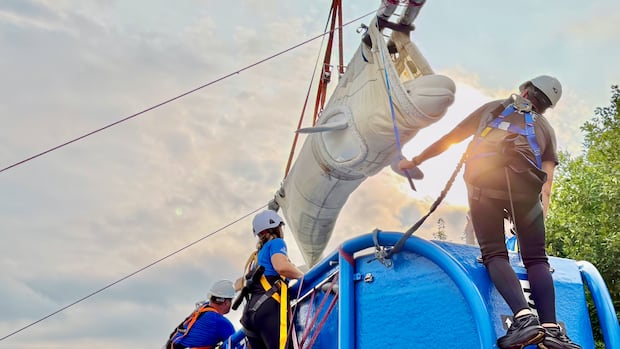
Animal Justice is urging Fisheries and Oceans Canada (DFO) to look into the passing of Peekachu, a 23-year-old beluga whale from Marineland in Niagara Falls, Ontario, which occurred at a Chicago aquarium.
The national organization advocating for animal law is also requesting that DFO suspend the current efforts to relocate marine mammals from the closed theme park until a thorough investigation has been conducted.
Peekachu was transferred to Shedd Aquarium on August 13 and sadly passed away on August 25.
In a letter addressed to Fisheries Minister Joanne Thompson, Kaitlyn Mitchell, the legal advocacy director for Animal Justice, has asked DFO to clarify how Peekachu was cleared for transport “despite evident underlying health issues.”
Prior to the transfer, health evaluations of the whales by a certified Canadian veterinarian were mandatory. Furthermore, a source disclosed to CBC News in January that Marineland needed to provide written confirmation of these assessments.
According to Shedd Aquarium, Peekachu was experiencing dehydration and had difficulty eating.
“On Tuesday evening, as teams were administering medicine and fluids, Peekachu unexpectedly passed away,” they stated earlier, noting that a necropsy is currently underway.
“From the beginning of this rescue, we acknowledged that each animal would undergo a significant transition, and that a full understanding of their health, including any conditions developed over time, would only become apparent through continual assessment and care.”
DFO asserts ‘reasonable measures’ taken for whales’ welfare
CBC attempted to contact Marineland for a response, but had not received a reply by the time of publication.
In a statement, Thompson’s office commented that “Peekachu’s passing is tragic news.”
They emphasized that the Canadian government has “taken reasonable measures” to ensure the safety of the whales. These measures involved issuing the necessary CITES permits after reviewing the transportation plan and granting Fisheries Act authorizations following individual health assessments for each whale.
“The minister has complete confidence in the rescue plan, which offers these animals the best chance for survival, as well as in the skilled professionals caring for them.”
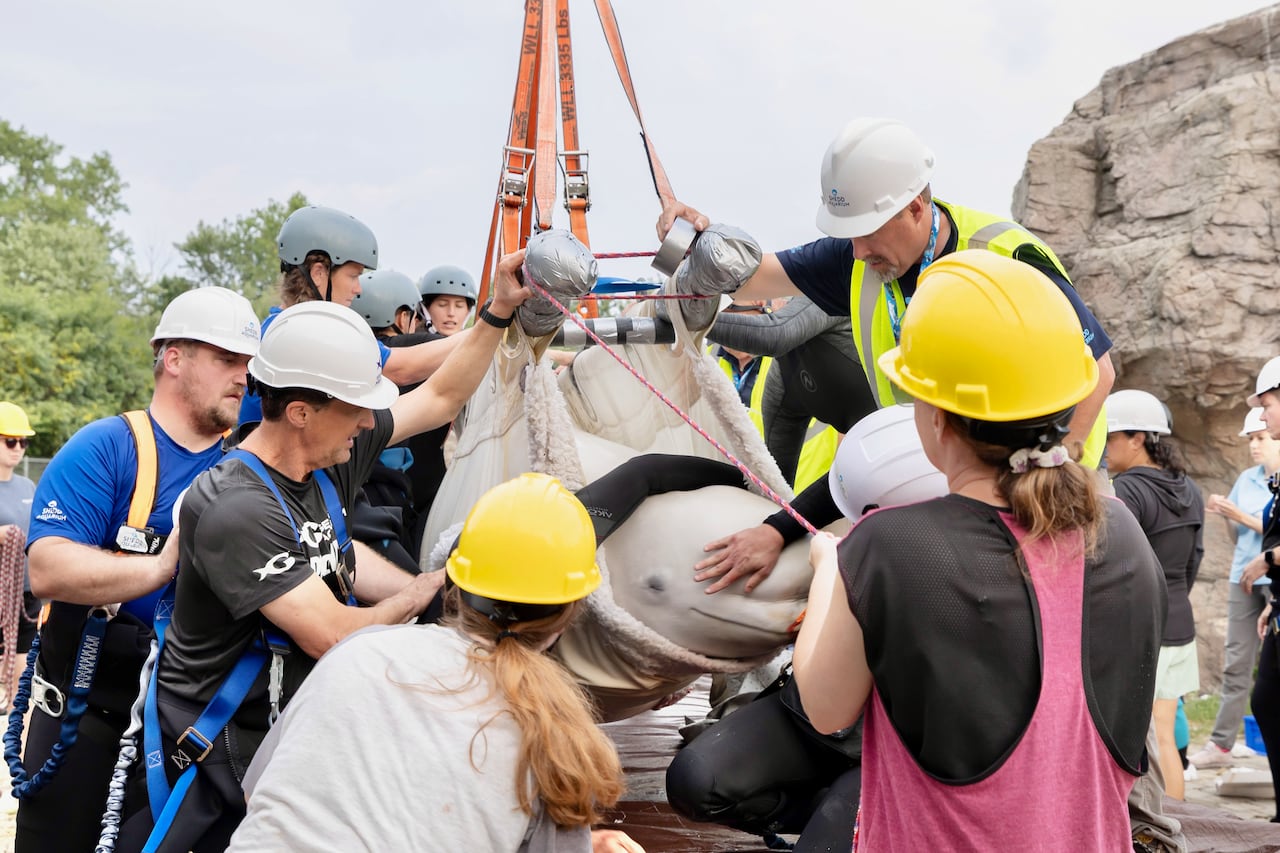
One of four beluga whales shipped from Marineland arrives at the Shedd Aquarium earlier this month. (Shedd Aquarium and Brenna Hernandez)
Mitchell’s correspondence requests that the relocation of the remaining six belugas—the last captive whales in Canada—be paused until an inquiry into Peekachu’s death has been finalized and it is confirmed that the other whales are healthy enough to make the journey to their new habitats.
“Transporting cetaceans is inherently stressful and potentially hazardous, especially for animals whose health might already be at risk,” it states.
A total of 30 belugas and four dolphins were slated for relocation as Marineland transitions all of its animals off-site. The park, which is currently for sale, has indicated it is running low on funds and can no longer afford to care for the animals.
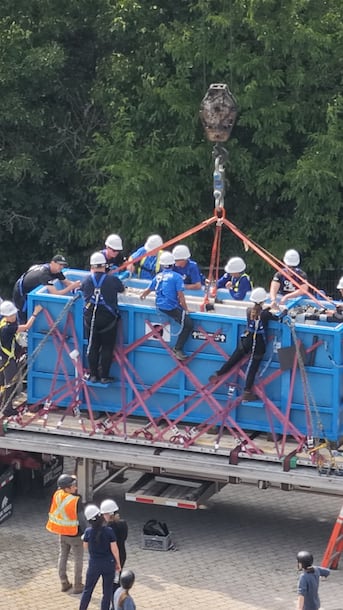
The emergency transfer of six beluga whales from Marineland in Niagara Falls to aquariums in the U.S. is now underway.
Marineland had initially sold its belugas and dolphins to an aquarium in China, but the federal government intervened, stating that the transfer violated a 2019 law. This law prohibits the captivity of whales and dolphins, along with breeding and performances.
Following Thompson’s rejection of the move to China, Marineland threatened to euthanize its whales unless the government provided an urgent financial bailout.
Subsequently, the park sought assistance from a coalition of American and Spanish aquariums. Its belugas have also been sent to SeaWorld facilities in San Diego and San Antonio, as well as the Georgia Aquarium in Atlanta.
Fears of additional whale fatalities
Naomi Rose, a senior scientist specializing in marine mammal biology at the Animal Welfare Institute in Washington, D.C., and a board member of the proposed Whale Sanctuary Project in Nova Scotia, shares concerns about the situation.
Rose supports Animal Justice’s demand for an investigation.
She accused Marineland of “washing their hands” of responsibility for the whales.
“[Belugas] are intelligent, social animals that can live for many years. They deserve accountability. Yet, the party responsible is not taking action.”
Rose added that she worries “more whales will perish.”
“Peekachu is merely the first.”
Rose indicated that Peekachu might have been afflicted with storage disease—a genetic condition leading to the accumulation of fats, sugars, and other cellular materials “that can harm organs,” exacerbated by stress.
“They are already under stress just living at Marineland, and then they are transported.”
Referring to the relocation process, Rose noted that the whales are “removed from the water, placed in stretchers, boxed, loaded onto planes and trucks, exposed to much noise, and left stranded.”
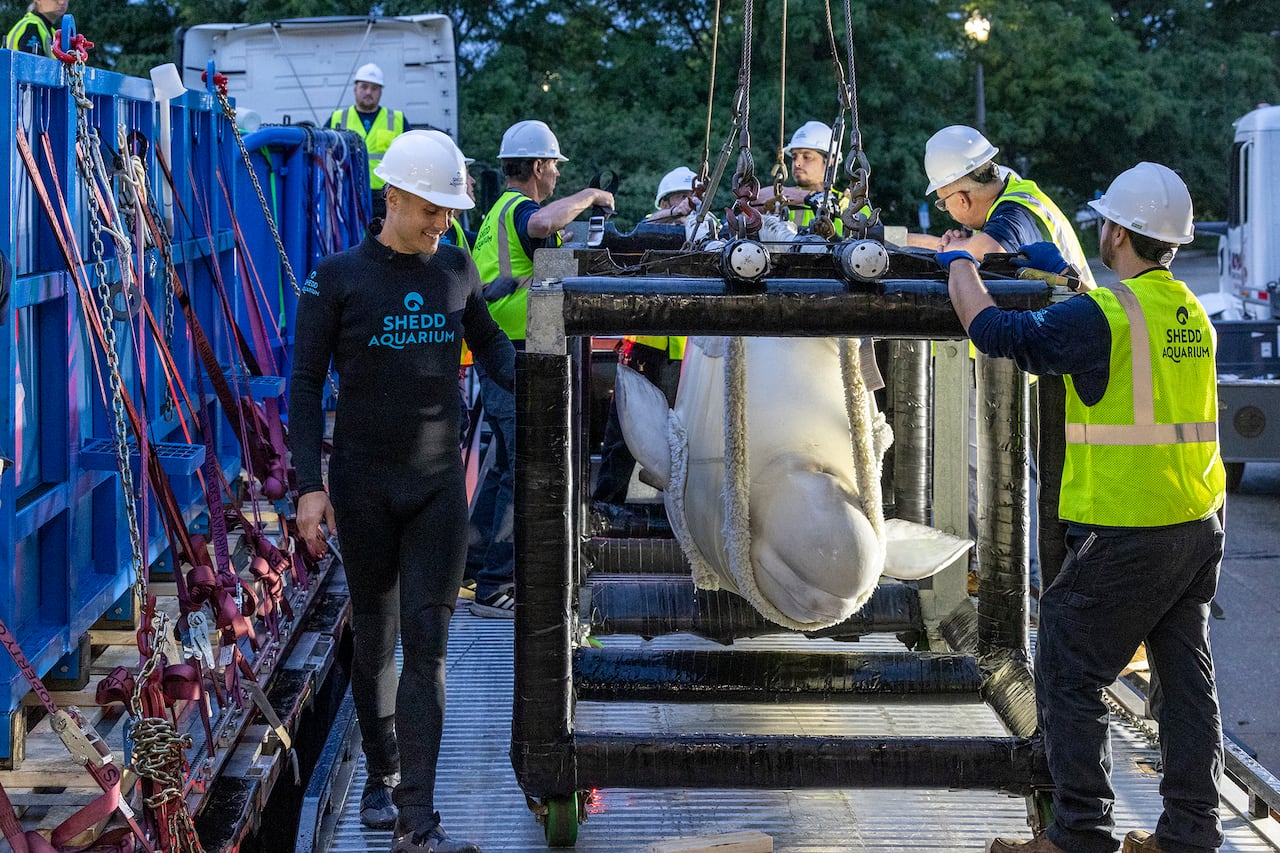
A beluga from Marineland arrives at Shedd Aquarium on July 21. (Shedd Aquarium)
Of the three whales that died at Mystic Aquarium from 2021 to 2023 after being moved from Marineland, two were found to have storage disease post-mortem, according to Mystic.
Searching for ‘the right solution’
Rose stated that the Marineland whales are being moved to different facilities and separated, which adds to their stress.
She believes that these difficulties cannot be attributed to the institutions receiving the whales and feels that Marineland should have delayed sending the whales to a sanctuary.
However, the owners of Marineland reported in 2025 that the proposed sanctuary in Nova Scotia is too contaminated and is not progressing towards development swiftly enough.
-
Why it’s so hard to find a new home for Marineland’s 30 belugas
-
Marineland says its belugas shouldn’t go to Nova Scotia’s Whale Sanctuary Project
Rose, who characterized the situation as a lose-lose for the whales, expressed disagreement with Animal Justice’s suggestion to keep the whales at Marineland temporarily, stating that she believes the belugas would still be at risk.
“I am unsure of what the right answer is. None of us truly know.”