
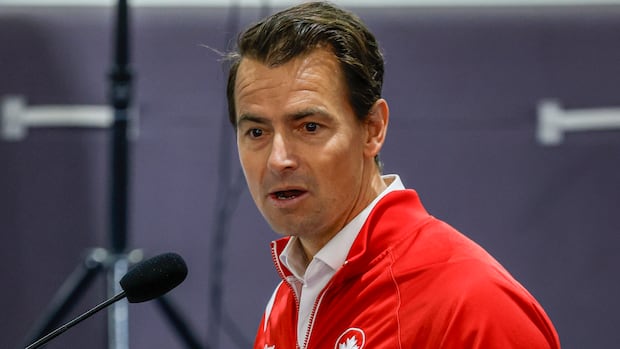
Almost five months following a significant announcement regarding sports funding, the federal government is set to initiate its rollout very soon.
More than 101 applications were received for the additional core funding first revealed in April, amounting to an estimated total request of around $168 million, which is roughly $40 million above the $129 million allocated for the fiscal year 2026-27, as reported by several executives from national sport organizations (NSOs).
These applications, which were due in July following a three-week preparation period, originate from NSOs, multi-sport organizations (MSOs), and members of the Canadian Olympic and Paralympic Sport Institute Network.
As winter sports are about to commence and summer sports are currently in their championship phases, there is a varying sense of urgency throughout the sector for the funding to be distributed.
On Wednesday, Canada Snowboard CEO Dustin Heise mentioned that he was notified just over a week ago that the funding could be arriving soon.
“We should have clarity in the next week or so, or certainly within the next couple of weeks, regarding what we can expect,” Heise stated, adding that the government has been supportive and transparent throughout the process.
“Like everyone involved in business or sports, we always hope for a quick response and turnaround. However, I believe this is a realistic timeline, and it has certainly met our expectations regarding achievable outcomes,” he added.
Bahoz Dara Aziz, a representative for Canada’s Secretary of Sport and Olympic kayak champion Adam van Koeverden, confirmed to CBC Sports that “applications are currently under examination, with funding decisions and rollout anticipated very soon.”
“After the spring economic update, applications for supplementary funding opened in June, allowing NSOs additional mid-fiscal-year support through an expedited process. This funding is supplementary to their previously designated core funding. Our commitment to enhancing the sport system means that support and investment in NSOs will continue to grow,” Aziz wrote.

Canada’s Secretary of State (Sport) joined CBC Sports’ Donnovan Bennett to discuss the Spring Economic Update 2026 which has proposed to provide $755 million over five years, starting in 2026-27, and $118 million ongoing, to Canadian Heritage to support Canada’s sport system.
Van Koeverden organizing summit
As reported by several NSO executives, Van Koeverden is set to host a summit for sports leaders in Ottawa on November 9-10, which may act as a pivotal moment. Another important date to note is the federal budget, which is expected to be released this fall.
The federal government has committed an additional $755 million over five years to address a funding “crisis” in Canadian sports, which includes a $660 million increase in core funding, $43 million for the Athlete Assistance Program, and $50 million allocated for event hosting and infrastructure.
In March, the Future of Sport in Canada commission report found that NSOs are severely underfunded, mirroring what the organizations themselves have been voicing for years.
“Our government recognizes that sport is a source of strength and a unifying force for our nation. That’s why we’ve made a historic $1 billion investment in sports, the largest in Canadian history, aimed at upgrading our facilities, supporting athletes, enhancing participation, increasing the number of Canadians on the podium, and attracting more world-class sporting events to Canada,” Aziz wrote.
On Wednesday, Alpine Canada and Capital Power, an Edmonton-based power generation company, announced a press conference set for Friday “to make [a] major announcement on the future of Canadian winter sport” at Calgary’s WinSport, with van Koeverden expected to be in attendance.
However, for the past two months, NSOs have been waiting, with some uncertain about their budget situations.
“The season has commenced, and training is already in progress. This means we need to lean forward a bit. However, we are still unsure if we will receive the funding we requested,” Skate Canada CEO Therese Brisson remarked in late August.
Heise concurred that it is crucial to determine as quickly as possible what funding will be available.
“This is a game changer. It allows us, along with all our provinces and territories, to support athletes and future snowboarders at every stage of their development, especially as we approach a new Olympic and Paralympic cycle this upcoming winter,” Heise explained.
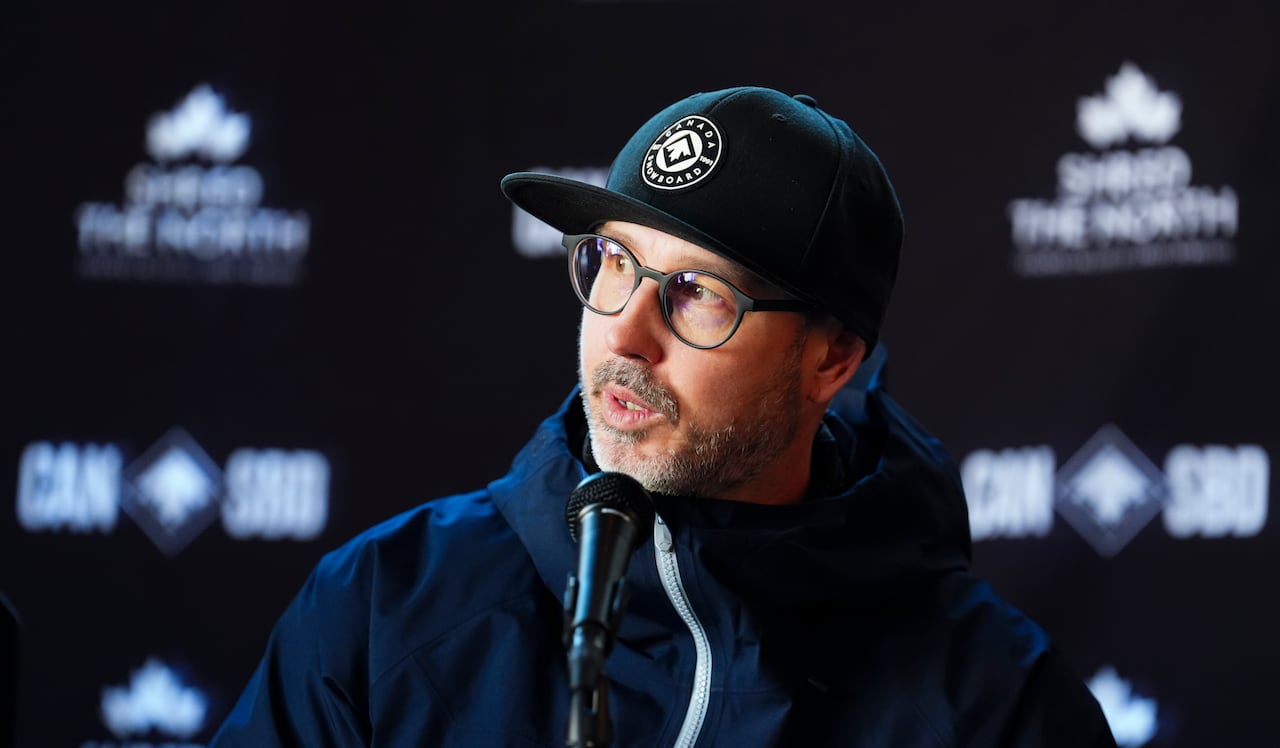
Canada Snowboard CEO Dustin Heise stated that the government has been supportive and informative throughout the entire process. (Sean Kilpatrick/The Canadian Press)
Dispersion of funds
Others, such as Golf Canada COO Garrett Ball, would prefer the government to focus on effective fund distribution over speed.
“I would rather they take their time to ensure accuracy rather than hastily distribute the money and make decisions that cannot be reversed when we review the fiscal years 2027, ‘28, and ‘29,” Ball remarked.
Proposals within the funding applications range from establishing free municipal putting courses to converting soccer fields into snowboard parks during the winter, as well as general sports promotion.
Key themes for the applications, based on the Future of Sport report, include a focus on safe sport, improving efficiency potentially through organizational mergers, and prioritizing grassroots initiatives.
Performance on the international stage, event hosting, and infrastructure are also vital considerations. Regarding infrastructure, the government has already begun distributing funds from its Build Communities Strong Fund, which includes $4.024 million allocated to Canada Snowboard national training centres and $9.8 million for a Canada Soccer national training facility.
For well-resourced organizations such as Skate Canada, the application timeline was manageable.
“I think the timeline is appropriate,” Brisson stated, who transitioned from CEO of Alpine Canada to the same role at Skate Canada this offseason. “I could have assembled that in 24 hours at Alpine because I was familiar with the business. My challenge at Skate was understanding the current status, but that was manageable.”
In contrast, for a smaller organization like Karate Canada, which has a team of three staff members and a few part-time contractors, it posed a greater challenge.
“The challenge was that it all came at us quickly and positively, and we had to prepare for the application from May to July,” said CEO Chris Bright.
“The expectations and obligations associated with contribution agreements are the same for a large NSO like Swimming Canada or Hockey Canada as they are for smaller organizations like Ringette Canada, Karate Canada, and Racquetball Canada, despite the disparity in staffing levels.”

Canadian Olympic Committee (COC) CEO, David Shoemaker, reacts to the Spring Economic Update 2026 which has proposed to provide $755 million over five years, starting in 2026-27, and $118 million ongoing, to Canadian Heritage to support Canada’s sport system.
$40-million discrepancy
Regarding the $40 million difference between the funding request and the available amount, this can be attributed partly to the government’s efforts to manage expectations throughout the process and partly as a strategic negotiation approach.
“NSOs have been advised in their applications to request as much as they can reasonably manage, knowing that resources are limited. If you only ask for $4, you are likely to receive only $4. However, if you request $8, there is a better possibility you might receive $6,” Ball explained.
One consensus among all stakeholders is the desire to utilize the funds efficiently, regardless of their arrival time.
“All these efforts are directed towards creating the best opportunities and experiences for those involved in the sport. From the high-performance perspective, we aim to support athletes, coaches, and referees who play an essential role in the delivery system,” Bright commented.
Brisson, an Olympic medallist with the Canadian women’s hockey team in 1998 (silver) and 2002 (gold), recalled how private investment had a direct impact on those teams.
However, core government funding had largely stagnated since that time. Until now.
“I am enthusiastic about this period in sports because the level of investment has greatly diminished over the years. It has remained unchanged since my time, which is surprising,” she stated. “This makes it an exciting time because, fundamentally, sports serve as a platform for nation-building.”