
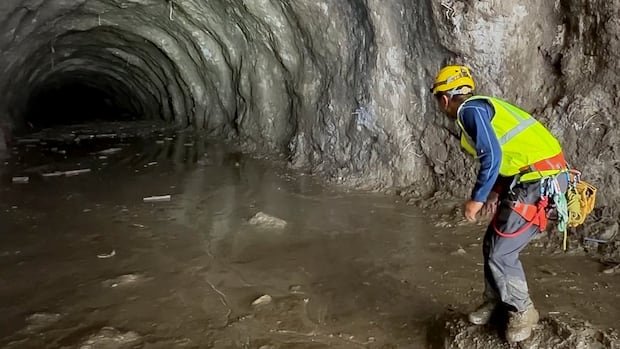
Rescuers were in a race against time to liberate hundreds of workers believed to be trapped in tunnels at hydropower sites buried in mud due to catastrophic flooding on the Nepal-China border. The death toll surpassed 950 in Nepal and China, with over 4,400 people missing. Power companies reported around 900 workers missing at 12 damaged hydropower projects in Nepal’s Rasuwa and Nuwakot districts, with approximately 500 workers believed to be trapped in tunnels.
Expert opinions varied on the chances of finding survivors, with some mentioning the possibility of oxygen availability while others warned of diminishing hopes. Australian tunnel rescue specialist Arnold Dix expressed optimism about the ongoing rescue efforts despite the challenging circumstances.
Efforts were concentrated on rescuing individuals trapped in vast tunnels built to regulate water flow. At the Upper Trishuli-1 Hydropower Project in Rasuwa, where 576 people were missing, including around 300 believed to be stuck inside the tunnel. In another project, Trishuli-3 Hydropower, crews worked to reach those trapped inside a tunnel by descending about 15 meters.
In China, efforts were underway to reconstruct the road to the Gyirong Port border crossing. State media coverage highlighted the deployment of rescue teams and the involvement of the People’s Liberation Army, with limited information available about the victims on the Chinese side.
Amid the ongoing crisis, concerns grew for missing Canadians and other foreigners caught in the disaster. Families and officials remained hopeful and determined to locate and rescue those still unaccounted for, emphasizing the need for international cooperation and assistance in the rescue operations.