
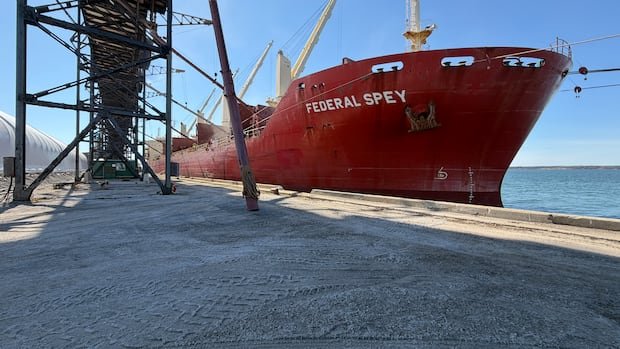
A vessel is prepared to depart from the Port of Churchill this week, carrying the town’s first grain shipment in more than five years. Loaded with approximately 30,000 tons of Canadian wheat, the ship is bound for Europe, marking a significant achievement according to government officials.
During a ceremony at the port, Northern Affairs Minister and Churchill-Keewatinook Aski member of Parliament Rebecca Chartrand expressed that this event signifies the revival of Churchill as a crucial northern link connecting the Prairies, the Arctic, and the global community. Churchill, being Canada’s sole railway-accessible deep-water arctic port, had its grain shipments halted due to the COVID-19 pandemic, with the last shipment taking place in 2020.
Arctic Gateway Group, the owner of the port and Hudson Bay Railway, announced in July its plans to resume grain shipments this summer. Recent activities at the port suggest a potential extension of its four-month shipping season, with feasibility studies proposing year-round shipping as sea ice diminishes.
Investing in the port is seen as a strategic move to expand Canada’s market reach amidst evolving global trade dynamics and changes in the country’s trade relationship with the U.S. The CEO of Arctic Gateway, Chris Avery, highlighted the port’s upcoming diversified shipping season, including its first-ever potash shipment alongside other cargo like zinc concentrate and a vessel bound for Nunavut.
Avery reflected on the neglect suffered by the port under previous ownership, emphasizing the importance of reclaiming control of the infrastructure. With shipments resuming under Arctic Gateway’s management post-2019, the current grain shipment, in partnership with AGT Foods, underscores the port’s renewed vitality.
Local resident Katie de Meulles expressed the need for further studies to understand the impact of increased port activity on the environment and wildlife. While cautious about port expansion, de Meulles finds assurance in Arctic Gateway’s Indigenous ownership, hoping for a balanced approach that benefits Canada while safeguarding the environment and local interests.