
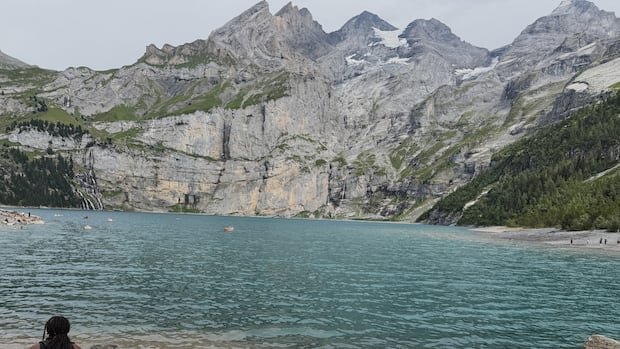
Glaciers in Switzerland, known for housing the most glaciers in the Alps, have experienced a substantial 5.5% reduction in ice volume this year, marking the second-largest decline on record. This loss has been attributed to heat waves and low levels of winter snowfall, according to experts.
The GLAMOS Swiss glacier monitoring service and Swiss Academy of Sciences issued a statement expressing concern that under such conditions, Alpine glaciers face an uncertain future. The trend of ice volume decline in Switzerland has intensified in recent years, with a nearly 20% decrease over the past five years alone.
Experts emphasize that the impact of global warming is evident in Europe, the continent experiencing the fastest rate of warming worldwide. Matthias Huss, head of GLAMOS, emphasized that current warming can be entirely linked to human-induced climate change, stating that without human emissions, the current warming would not exist.
The record retreat of glacier ice in Switzerland in 2022 was influenced by a combination of factors, including summer heat, minimal winter snowfall, and the deposition of reddish dust from the Sahara. Huss highlighted the importance of winter snow cover in preserving glacier ice, as it acts as a protective layer against melting and contributes to the formation of new ice.
The effects of climate change extend beyond Switzerland, with recent events such as the destabilization of a Himalayan slope leading to catastrophic flooding in Nepal. Satellite imagery has also shown significant glacier shrinkage in regions like Greenland and Antarctica over the past few decades.
While the absolute ice volume lost in Switzerland this year is lower than in 2003, the percentage decline is more significant due to the considerable reduction in total ice volume over the years. The accelerated ice melt in Switzerland this year has led to the loss of a substantial amount of water, equivalent to four times the country’s annual water consumption.
Switzerland’s glaciers play a crucial role in providing water to Europe’s major rivers, including the Danube, Po, Rhine, and Rhone. The excessive melting experienced this year has resulted in a notable thinning of individual glaciers and significant reductions in glacier tongues.
Glaciers such as Allalin, Clarident, Rhone, and Aletsch, the largest in the Alps, have witnessed record levels of melting. Experts emphasize the urgent need to stabilize the climate by reducing CO2 emissions to mitigate further glacier loss, although the outlook for Swiss Alps glaciers remains bleak. Efforts to protect ice in polar regions are seen as critical to limit sea-level rise and safeguard coastal communities.