
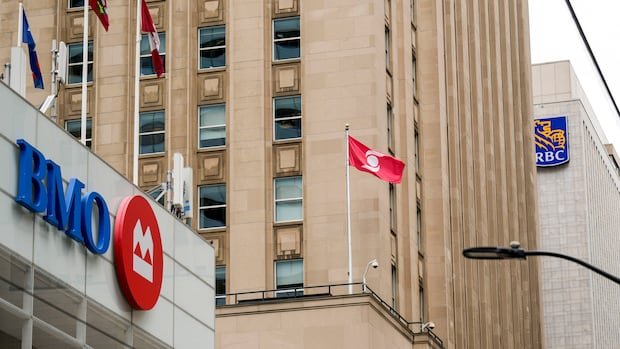
Canada’s major banks are shielded from direct tariff expenses, but their extensive portfolios holding trillions of dollars in consumer and business loans are at risk due to the economic repercussions of the escalating trade conflict with the United States. Despite this, top bank executives remain unfazed.
This week, Canada’s largest financial institutions commenced reporting their third-quarter financial outcomes. These results arrive amidst ongoing political tensions and the introduction of fiscal support measures by the Canadian government to alleviate the impact of American tariffs.
Bank of Montreal and Scotiabank were the first to disclose their results on Tuesday, followed by National Bank on Wednesday. Royal Bank of Canada, Toronto-Dominion Bank, and CIBC are scheduled to report on Thursday.
During a post-earnings call with market analysts, National Bank’s president and CEO, Laurent Ferreira, commended the resilience of Canada’s economy in the face of heightened uncertainty with its primary trading partner over the past 18 months. He also praised the government’s new aid initiatives for businesses and workers.
Scotiabank’s CEO, Scott Thomson, described the recent trade volatility as “manageable” during the bank’s conference call, highlighting positive aspects of Canada’s economic landscape such as job growth and fiscal strength stemming from oil prices and government initiatives.
While recent U.S. tariffs on Canadian goods directly affect only a small fraction of Scotiabank’s loan portfolio, the broader economic weakness could impact the banks through consumer products like mortgages, auto loans, and credit cards.
Both Thomson and Bank of Montreal’s CEO, Darryl White, viewed the trade tensions as an opportunity for governments to address internal trade barriers and foster economic growth. White emphasized BMO’s significant presence in the U.S. market and its optimistic outlook on the benefits of the “America First” policy for Canada.
National Bank’s Ferreira anticipates that the government’s investment plans will create lending opportunities, particularly in energy and infrastructure sectors. He emphasized the importance of strengthening Canada’s economy through strategic investments.
Despite the trade uncertainties, Canada’s major banks are performing well, with their stocks trading near record highs on the Toronto Stock Exchange. Analysts note that the banks have managed to maintain lower-than-expected loan loss provisions in their latest financial reports, reflecting the overall resilience of the Canadian economy amidst challenging circumstances.