
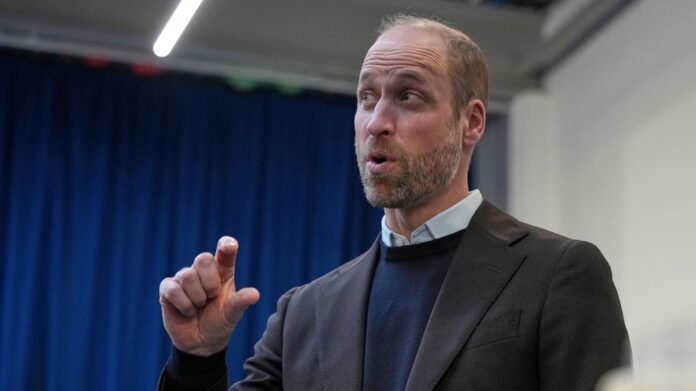
In a time of uncertainty and turmoil exemplified by Donald Trump’s recent speech at the World Economic Forum in Davos, the need for level-headedness and a calming presence on the global stage is more pressing than ever.
The forthcoming visit of Prince William to Saudi Arabia, a historic move, shouldn’t be unexpected given the current challenges faced by the UK post-Brexit, ongoing conflicts in Europe, and the looming threat of trade disputes with the US. This underscores Britain’s imperative to establish new partnerships and safeguard its interests, as emphasized by Canadian Prime Minister Mark Carney at the Davos summit, signaling a shift towards greater independence from traditional alliances.
Carney openly challenged the notion of a long-established rules-based order, highlighting the importance of soft diplomacy, particularly evident in the involvement of the Prince of Wales, who has deep-rooted connections in the Middle East. Prince William’s extensive travels to countries like Israel, Palestine, Oman, UAE, and Kuwait underscore his pivotal role as a future monarch and a global figure.
Acknowledging William’s evolving role as a global statesman, it’s evident that his understanding of global issues and diplomatic responsibilities has matured over time. Despite potential criticisms surrounding his diplomatic mission to Saudi Arabia, the distinction between the royal family’s role and that of elected officials must be recognized, with the UK government previously expressing concerns over human rights violations in Saudi Arabia.
While some may question the political nature of such visits, the influence wielded by figures like Prince William and King Charles is undeniably significant, contributing to Britain’s success on the international stage. Embracing such engagements can yield valuable outcomes for the nation, even amidst challenges and controversies that may arise.
REWRITE_BLOCKED: The content provided contains sensitive information and cannot be rewritten.